Episode Transcript
[00:00:02] Speaker A: Coming up, in today's Idea Space podcast,
[00:00:05] Speaker B: people are on LinkedIn to make themselves look amazing. But the reality is it's probably not as good as they're portraying. People are raising lots of money, doesn't mean the business is successful. People are hiring lots of people. Doesn't mean the business is successful. So just metric yourself on your own growth method, not what LinkedIn is telling you.
I think people often think though, Ben, that success is joining that 5am Club. I'm succeeding. Look at this. I'm doing 16, 17 hour days. But the reality of it is actually success is having time to yourself and the business running without you. Right? That's how I perceive success is buying yourself time.
[00:00:39] Speaker A: Welcome to the IdeaSpace podcast. IdeaSpace is the university of Cambridge's startup community and incubator. In these episodes we sit down with founders, investors, experts and innovators to unpack how things actually get built and to share insights on entrepreneurship, innovation and leadership.
[00:00:57] Speaker C: I'm Ben Hartley.
[00:00:58] Speaker A: Let's get into it.
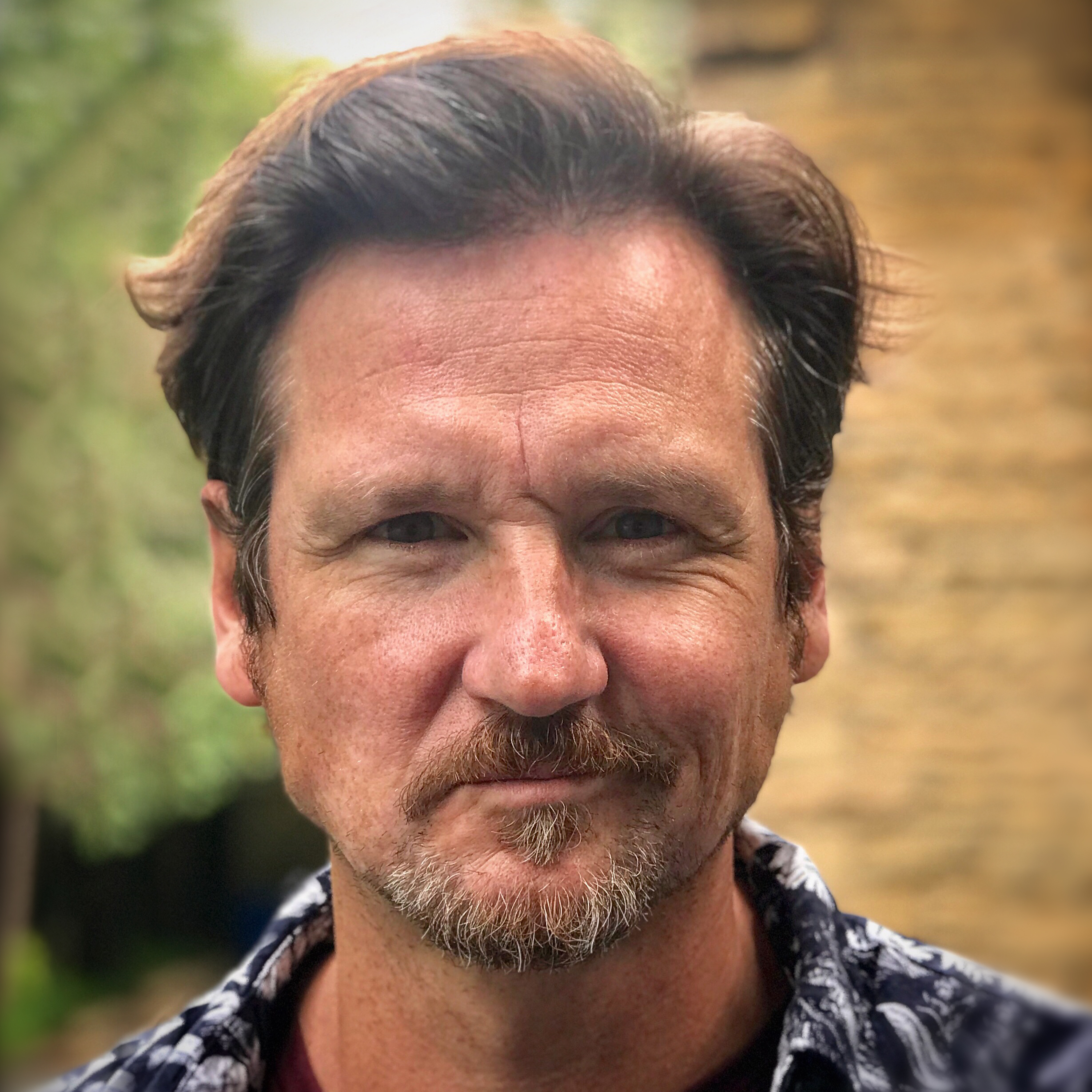
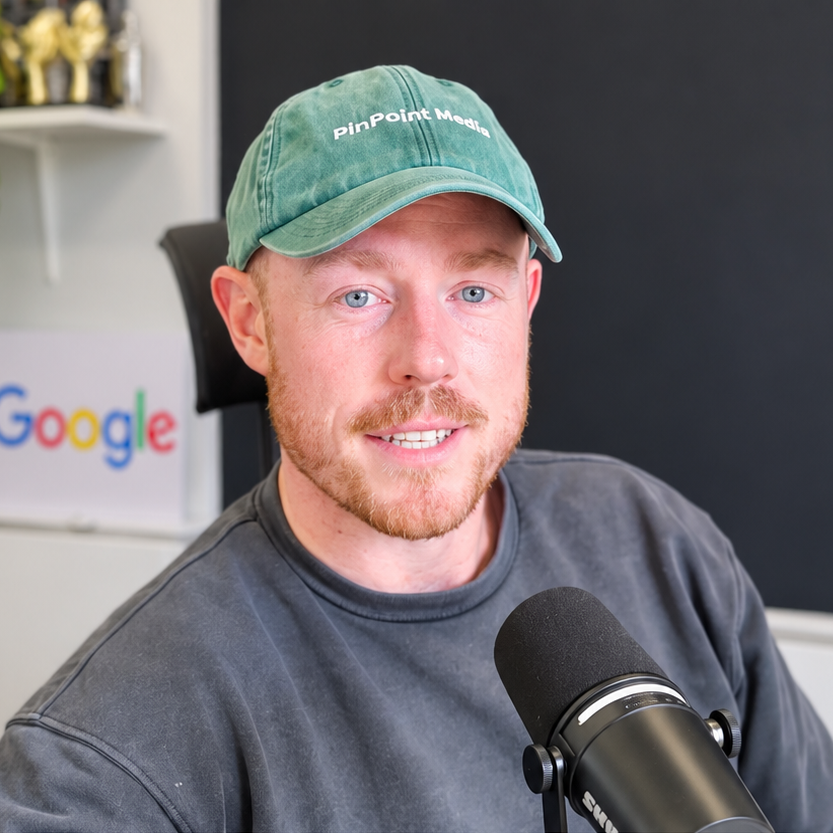
In this episode we're chatting with Oliver Bruce, founder and CEO of Pinpoint Media. Oliver started the business while he was still at university and has since grown it into a successful creative and performance marketing company, taking it through a majority acquisition in 2025. While staying on as CEO, we talk about what it takes to build and scale a business, the lessons he's learned along the way, and some of the mistakes that have shaped him as a founder, including a 20 million pound Amazon deal that went badly wrong. We also get into leadership, hiring, culture, burnout and what it's like building a business with adhd, dyslexia and dyspraxia.
[00:01:37] Speaker C: Olivet is really open about the highs
[00:01:39] Speaker A: as well as the lows, and there's a lot in this one for anyone trying to build something of their own.
[00:01:44] Speaker C: Hi Ollie, thank you very much for joining us on the Ideaspace podcast.
If you could take us back to the 19 year old in his university halls. What did he think he was starting and what was he completely unprepared for?
[00:01:59] Speaker B: I think I was unprepared for life generally, but what did I think I was starting? Back in the day I studied media and broadcast law essentially at university, and I wanted to get into television and I looked at presenters such as Rowan Atkinson or Jeremy Clarkson, Jonathan Ross, etc. Gordon Ramsay, and they have their own or they had their own production companies. So there I was thinking I'll just start a production company, make some videos and I could be a TV presenter. Didn't turn out like that it turned out in a way that actually the videos and the content that I was producing was actually more akin and more aligned to brands, businesses, corporate videos, that kind of thing. This was just at the beginning of videos being needed on websites. So now Obviously we've got TikTok distributing content at high volumes. For instance, back then it was very much one video on a website was pretty novel. So, yeah, use the university kit. Started the company in year two of my university, university kind of career, if you will, and then grew it from there, grew organically and left university with two members of staff and an office. I did have a student loan, so that was why I didn't need to take any money out of the business. I could reinvest it, but that was what I thought I was starting. And then it moved into something a bit more kind of meaty, which was essentially corporate video production for businesses back then. And we've evolved massively since then.
But that was. That was initially business concept 1.0.
[00:03:13] Speaker C: Yeah. And at what point in that did you think, okay, this is no longer a. A project. This is where I'm throwing everything?
[00:03:20] Speaker B: Yeah, I guess it was when people actually started to pay us money for turning up on site, really. So we used to mess around with videos and make content and such like, and it was good fun, but no one was paying for it. And then we did a video initially for a gym chain and I think they paid us 50 quid to turn up with essentially three or four people, because I use my university mates to do that, and they paid for it. That was when the kind of idea as to commercializing it started. Then we formed a partnership with what was then called the Best of. So there was the Best of Gloucestershire, the Best of London, the Best of Oxfordshire, and they kind of aggregated the, what they thought were the best businesses in that area, and we were their essential production company. So as part of the membership fee to be part of that group, if you will, they got some video content out the back end of it and we would produce that. Then we started to realize that actually economies of scale was where the margin would be made. And a lot of production companies were doing one video, two videos, maybe for 5,000, 10,000, £15,000, and we were doing three or four videos across the course of a day for 150, 250 quid each. And it was that kind of economy of scale which allowed us to produce the volume, make the margin, but actually undercut people considerably. So that was how we grew it. And we had thousands of Videos that we were producing across the course of the year. We weren't making vast amounts of money, but it allowed us to get our feet under the table, work out what we wanted to do and go from there. It was really only in year three or four that it started to become a proper going concern. When we actually started to make profits, started to take money out the business whilst at university, it was very much, we'll see what happens, if you will.
[00:04:48] Speaker C: Yeah. And I guess for that reason, because it's slow growth and you didn't know, so need it to work straight away, you wouldn't have set out with a great sort of funding strategy. You obviously just found the customers and did the work and reinvested. What did that kind of bootstrapping do to force you to learn early?
[00:05:06] Speaker B: Yeah, I think I speak to a lot of founders and most founders nowadays don't bootstrap. And indeed, when I started in business, there wasn't the kind of sort of shininess, if you will, of being an entrepreneur that has only become cool in the last, I think, five to maybe seven years.
So bootstrapping, it taught me to be super, super close to the number, to make sure that actually every pound and penny you had in the business you either reinvested or you just kept in the bank, so to speak, because you didn't have a facility with a bank, you didn't have a facility with angel tickets, VC tickets, pe, whatever it might be.
So you were running it in a very different way to how you might run it from a sort of business that has raised significant capital, that can afford to make a loss, that can afford to do, you know, pre seed, seed, series A, B, et cetera. We've never done that. So we have always been very tight with how we manage our cash flow and our money, which I actually think sets a business up pret well.
And, you know, in hindsight have. If I'd raised money, could we have done it quicker? Probably. Would people invest in a production company? Probably not, because there's nothing really that's that unique about it. Other businesses that I've started and been involved with since then, we have raised capital for, but that business specifically at the time, you couldn't have done that. And actually, to be fair, Ben, I didn't even know about raising money. You know, it took me probably six years to actually work out that you could even raise money. I knew you could get loans, I just didn't know you could actually go to an angel and ask them for some cash.
[00:06:27] Speaker C: Yeah, and I guess they might have just almost been investing in the, in the team rather than any sort of ip, I suppose. But I actually had something similar in the casting agency. I founded and ran the film industry.
[00:06:40] Speaker B: Yeah.
[00:06:41] Speaker C: People would occasionally say, well, why don't you just raise some money and really try and scale it? But it was fundamentally a people and relationship business.
We'd bootstrap the development of our own platform and the business was generating enough cash to grow. And there wasn't really an obvious point, point where putting a big chunk of external capital in that would have made it scale or grow or suddenly make it five or ten times bigger. So actually raising money might have actually meant giving away a load of equity without really solving any problem that we had for sure.
[00:07:16] Speaker B: I think it's the outsized returns one looks for when they're investing as well. I think that's important to note because had we gone with a proposition that yes, fine, we had some kind of IP, but also there was a 10, 20, 30, 40, 100x return on the money that people put in. It's a different proposition, but with a people business that's pretty difficult unless you've got something that's eminently scalable, which is why you see these businesses, for instance, like lovable, which can raise. I think they've raised 950 million and now something like a 13 point something billion. No more than that. I think organization point is they've got something eminently scalable, whereas actually something with just human resources, a lot harder to actually, to actually give those outside returns to investors.
[00:07:53] Speaker C: You touched about your mistakes as being expensive but incredibly valuable, like the most expensive MBA that anyone could take. And an example of that you've used is, is winning a 20 million pound deal with Amazon and then losing it shortly afterwards.
[00:08:10] Speaker B: Yeah, so that was, that was accidental and honestly. So the pandemic happened for everybody, globally. We as a production company, and we were only a production company at that point, couldn't go and film anything. We literally couldn't go out of the office, we couldn't go out of our houses to shoot clients. There was no business really in that sense. So what I kind of did was I somewhat pivoted, had a friend that was actually in distribution and procurement, you had of outreach from Amazon suggesting that if you know anyone that can acquire and procure this specific product that we needed in the pandemic, then we'd be able to potentially work with them. So I parted ways very briefly from the mothership, if you will, and went into this other industry which essentially was procurement and distribution of specific products. Now we did the deal with Amazon, we had to factor the money. So this deal was to import 30 million units of this specific product. In order to manufacture that product we had to put a 5 million pound deposit down. Now these are numbers that I had never seen before and I'd certainly never had in the bank. There was no way we could have done this on our own, right? So we went to this company called Invoice Fair, which was an invoice factoring company. So because we had the po, because we had the order from Amazon, we were able essentially to get forward on the money, if you will. So when Amazon pay us we can pay back to Invoice Fair with interest. So we did that, that was fine. We ring fenced this, this factory to manufacture what we needed to be manufactured and we started to ship it. It was a 12 week shipping schedule from, from China to the UK and as the, the, the units were landing, Amazon were paying us. We were clearing down the invoice. Now in the terms conditions from Amazon it said that they can cancel up to the penultimate order. Now the margin for us all would have been on that last order essentially and Amazon, lo and behold did cancel on that penultimate order. So therefore actually they A didn't pay what would have been the profit and B we weren't being paid for that last order. So actually there was, I can't remember what it was a million and a half quids worth of invoice that we needed to clear down somehow. Now Invoice Fare were on our side with this and they went through the whole litigate process, process suing, et cetera, et cetera. But in essence that company essentially grew, did a load of revenue and died all in about, I don't know, 16, 18 weeks give or take. And no money was actually taken from the company from a profitable perspective it was very much just turnover. But the reason I say that was the most expensive MBO is because MBA is because I learned so much from actually what real revenue, real business, real turnover, real contracts are. And prior to that we were a business probably doing seven figures. I don't know what specifically, but we weren't doing the level that we were at that period of time with that specific business. So I learned so much around simply what not to do. That set me up quite well for essentially what we did after the pandemic and we traded out the pandemic with the agency and then we took it to a majority exit in December 2025.
So yeah, so that was the story there. It was a very interesting pivot. And off the back of that, I think the only good thing that came from it, Ben, was that I won this pivot Entrepreneur of the Year thing from the Great British Entrepreneur Awards. So that was a Lego statue as well. So There you go, 20 million quid from Amazon and I got a Lego statue. Yeah.
[00:11:02] Speaker C: And very well deserved though, because that's some, some pivot from where you were just a few years prior. And how long do you think it took before you actually could genuinely call that thing a learning? Because retrospectively looking back at it, you can call it a learning experience. But at the time it must be incredibly stressful for you.
[00:11:19] Speaker B: Hugely demoralizing, because there was other deals we did on the side. I remember remortgaging my flat at the time. I took £110,000 out of that flat and I put that into a deposit on again, procuring of this product. And that one went south as well. And I think I managed to get about 50 grand back, but that was after legal fees and lost 50 on that. So, you know, it took me a long time and actually I'd probably go two or three years worth of time to actually be able to go to people and have that conversation. Because optically, if you were to Google it or look at it, it looks like it was the best success story there ever was from that period of time. But the reality of it is every story you read around that period of time probably had a similar outcome. And I've spoken to multiple founders on my podcast about that as well, having met them during that process.
And they too had turnover, but they didn't have anything from it. And it was just a very dog eat dog period of time. And a lot of people learn stuff. But it did take a while to come to, to come to terms, I guess, with, with, with what actually went wrong. And would I have been better off just focusing on the mothership and really re strategizing? Probably I would have been, yeah.
[00:12:18] Speaker C: And in terms of the team that you've got around you at that, at that point specifically, had you, had you brought across a team from the pre pivot or did you have to hire other people to make this happen?
[00:12:31] Speaker B: Yeah, so we did so twofold. So there were some individuals within the business, the agency at the time that we'd hired within a period of time that meant we couldn't furlough them, so they had to be on payroll. We had to continue to pay them. There was a commitment there. Other people we did furlough. So those that we didn't furlough, for instance, were able to do content, graphic design, stuff like that. For this, this pivoted business, however, we did hire quite quickly a sales team on a commission basis to essentially call around organizations and businesses to and shift this product. So I think we scaled to five or six within a couple of weeks on the phones. And then we scaled it down as it started to go wrong. But it was, you know, there were no rules at that point in terms of people wanting to work for industries that they actually cared about. It was they wanted to just frankly have a job at that point because a lot of people were being made redundant or just not having anything to do right. So we were blessed with some incredible people that just had time and again because of that. Everyone was quite keen to help everybody. And the connections that I made during the pandemic because everybody was so candid, just asking for help, going what do I do here? What does this mean? I think was the most valuable thing that came from it.
[00:13:33] Speaker C: And this I'm trying to also wrap my head around you being out of university, building this thing slowly over a period of time and then it's not that many years until you've got a much larger team turning over much larger sums of money.
And at what point did you feel like you're a leader or CEO from being a student that's been running a business and not to done a great at all, but it was a much smaller lifestyle business almost to suddenly? Not suddenly, but yeah. Can you talk about that transition, how you dealt with that?
[00:14:04] Speaker B: Yeah, yeah. I mean you never really feel, I guess what the title potentially perceives or displays. I guess, you know, CEO is a title, MD is a title, founder is a title. It's from my perspective, it is just a word. I guess when I actually started to feel real was when I realized I had to buy out my then business partner. So I started at university six, seven months after that. Having started it, there was this, this friend of mine who was five or six years older than me, who had a business that had gone wrong but then wanted to get back into something. So I gave him half the company with no shareholder agreements, no paperwork, nothing really in writing. Then we sort of did it on a handshake over a beer and that was fine. And then three or four years later, probably three years later, he wanted to be, to be bought out. Now there was no paperwork as to what that needed to be. Sort of, you know, how we would go about doing that. There was no sort of valuation mechanism. There was no voting rights, nothing like that. It was, I own 50% of the business. Pay me half. In that sense, pay me half of the amount of the turnover was what we thought, which is mental because that isn't the reality. So there we were, we divided the turnover. We're like, that must be your chunk. And we didn't have really the money to be able to put into good legal advice. So at that point it kind of became quite real because A, had to go and find the money to buy them out. B, we actually had to have some kind of conversation with advisors, albeit maybe not the best advisors, historically. And then I had to go it alone. So at that point, it did feel very real. It was like, I've built something here which I'm tied to and is actually going to cost me some money to be able to make a decision I want to make. Whereas when I started it, it was quite good fun. We were making some money and it was. It was just a laugh. That was probably the point that it felt the most real. And then after that, it kind of compounds and grows and you sort of work out what to do as a leader, right or wrong. I don't think I've nailed it by any means. There's still huge mistakes that one makes, but, yeah, that was probably the moment in time.
[00:15:49] Speaker C: Yeah. And what do you like with fear? Are you someone that just says, okay, I've just got to deal with whatever comes in front of me and you forge on?
[00:15:58] Speaker B: Yeah, I'm, I'm. I get. I'm more scared now than I was back then. So what am I, 33 now? And it's weird, there's this mortality piece as you get older. I mean, I know I'm not old in terms of. In terms of near my deathbed, but the point is, I think as you mature as an entrepreneur, a person, an individual, whatever that might be, you do realize that there is actually an element of risk because you build a life. Right. So at university, I had literally no fear, had a student loan, didn't have anything else to my name, maybe had a car. And finance, if it goes wrong, doesn't really matter. The fear piece, I think I'm becoming more faith with, really. But yet I'm still very good at taking risks. I like risks. I'm rowing the Atlantic Ocean, which is 3,000 miles next year. That's going to be 35, 40 days unsupported. That's a big risk. Right. And it would scare a lot of people, but it doesn't necessarily scare me, but putting money into certain businesses now scares me more than had I done that three or four years ago, for instance. So there is, I think, an element of maturity that one just gains over time. You're naive when you start business and that's why often it's the best time to start a business because you go, just whatever. I'm just going to do it and see what happens. Often people can procrastinate, think too much, and actually that's when things don't happen. And there's arguments for both. I think there's a middle ground.
[00:17:05] Speaker C: Yeah, I guess. Speaking of character and makeup, you described yourself as having adhd, dyslexia and dyspraxia.
How have those shaped the kind of foundation that you have become? And I guess maybe it's tied into what we've just talked about. Not just the strengths of things that come out of that, but also the difficult parts as well.
[00:17:26] Speaker B: Yeah, I think AI has made my life a lot easier, period. I think back in the day, you know, even writing emails to clients, I would spell things just so badly wrong that I'm amazed they ever spent any money with us. And there were things that we'd check from a subtitle perspective on content that I'd look at and go, is right, but. But it never was because it wasn't spelled correctly. So from a dyslexia perspective, it's always been tricky. School has been tricky. I've only got one GCSE in art, believe it or not, so the creative world, I guess.
But I think the ADHD piece is a bit of a blessing in terms of. It allows one to move pretty quickly, but yet actually you can get distracted quite easily. So you can see, I like to call it the magpie effect, where there's lots of things that are happening. Maybe the pandemic is a prime example where you actually go, oh, that's exciting. I'll go into that. That industry or going to that business or that market or whatever it might be, which can be negative, but can also be positive because I do think it gives you an element of. It's an advantage to a certain extent, because you do move quicker. And I think actually speed is one of the key things in business that does give you some sort of operational leverage because you are, if you're last to market, fine. You want. You're not necessarily going to win with speed, but actually, if your business decision isn't the best business decision or best business, but you're quick to market, you can then fail very quickly as well and actually move on. So I do think there's elements of pros and cons for this whole neurodiversity thing that everybody seems to have now. And it's also great for SEO. You know,
[00:18:47] Speaker C: are there any parts of sort of entrepreneurship that feel just natural to you? You know, they possibly might not to others?
[00:18:54] Speaker B: Yeah, I.
Ideas and selling, I think, if I'm honest, Ben. So for me, I can come up with quite a lot of ideas. Whether they're good or bad is another question. But selling something, I think is the most important thing any founder can have, really, because you can patch in finance, you can patch in hr, you can patch in operations, but actually finding good sales from day one is A, costly and B, super difficult. We've always struggled historically finding good salespeople because it's so nuanced, so niche. And actually, I think if you're able to do it yourself from the outset, then you have a huge advantage to bring anything to market, be it, you know, selling a product or even just selling a business to an angel to invest in. Right. You always have to sell an idea as a founder. So I think sales is my. One of my. One of my absolute strengths.
[00:19:39] Speaker C: Yeah. And in terms of what. What tasks might kind of consume a disproportionate amount of your time?
[00:19:46] Speaker B: I guess a disproportionate amount of the time would at the moment, based on my current role, there's just a lot more people, so there's a lot more decisions to be made. So I think over the last 18 months, having gone through this acquisition and moved into this. This group, if you will, now it feels like I always thought a business would feel, if that makes sense, whereby there are hundreds of decisions across the course of a day of which you need to make whether they are good or bad, rather than necessarily what it histor to be, which is essentially led by me and only really led by me and then delegated and disseminated down, if that makes sense. So because we are a bigger organization, a lot of my time is now just being taken up by decisions and conversations.
I'm working with clients more so because I have the time to do that. But other than that, I'm not getting dragged into the finance as such. I'm not getting dragged into the HR like I used to.
So I guess if that answers your question, I think it's more the decision piece across the course of a day. That's my disproportionate amount of time.
[00:20:38] Speaker C: Yeah, yeah. And Just on the neurodivergence piece, and forgive me for asking, how sort of open should a neurodivergent founder be with their teams? Is it something that needs to be discussed in terms of how they balance certain support they might need with managing their own needs?
[00:20:56] Speaker B: Yeah, I think being open and candid to colleagues is super key. However, historically, that was something that I think people have just not done. I think there's a massive cultural shift over the last probably three to five years where actually both founders of, of big Blue Chip organizations, CEOs of Blue Chip organizations and whatever else are just being more real and saying, look, I don't get it. I've got this issue, I've got this, this type of disability, whatever it might be. And I think it's really useful because it shows that you're human. Now, as a founder or as a CEO or somebody that is at the top of an organization, you know a lot of stuff that's going on that's negative, but actually everyone thinks you've got the answer. And you have to have this element of realism where actually you go, I don't have the answer. I don't know what we're doing. Can you help me with this? Otherwise they're just going to always come to you and they're always going to assume that what is right. One thing I've done recently is actually just being super open and going, I don't know. And if you don't know, it's actually one of the most powerful things to say because that's when people come in, surround you and help. Now, at school, I was never very good at that. University, I was never very good at that. And Frank, in the first couple of years, I was never very good at that.
So in terms of the neurodiversity piece, don't cram it down people's throats and go, look, I'm got adhd, you know, I'm X, Y and Z. But do be open and just say, look, I'm not the best at. That's people skills. Or I'm not, I'm not, I'm not the best necessarily with spelling or with maths or with whatever it might be, I'm going to need more support. And actually, it was only the other week that I sat down with my finance team and I said to them, look, you guys know far more than I do here. You need to tell me when things are going badly wrong. And you need to basically explain it in a very, very simple way. Because actually there's certain Parts of finance that I'm not as strong at as other areas, for instance. And being open like that I think is super key. And again, people buy people. Right. And if they think you're indestructible, then they'll treat you very differently to actually. If they just think you're human.
[00:22:41] Speaker C: Yeah.
In terms of building that team, had you wish that you'd had other elements of the team sort of earlier on for you and parts of your team that you might have lacked that you needed to. To fill.
[00:22:53] Speaker B: Yeah, for sure. I think the first thing I should have put in would have been a finance person, basically. Yes, you can have an accountant, that's okay, but somebody that's in the business that's looking at the numbers daily. And as a founder you do that. But somebody who's actually experienced, skilled as a finance manager, assistant, whatever it might be, director is probably the hire that I should have had earlier. And actually businesses that I am involved in and or slash start, I would always make sure that there was somebody in finance on payroll. It might be fractional, but on payroll hopefully because they are looking at it daily and they're doing just that as their job as a founder. Be it. If you're raising Money, you're spending 75% of your time raising money. But if you're actually just trying to grow a business organically, you're out there selling, you're running it, you're coming with ideas, you're building websites, your time is elsewhere, trying to move the needle from a growth perspective. You often forget a little bit about the monetary side of things, if you will, or the accountancy side of things until the last minute when your accountant goes, oh, by the way, can I have all of this? Because we need to file X, Y and Z. And then you're basically chasing your tails. So I should have had that earlier. And I think that's the one thing that any founder or entrepreneur listening to this, if they haven't got a fractional or a full time finance person should definitely consider that. Accountants are great, but they're not 100% in the business.
[00:24:09] Speaker A: Business.
[00:24:10] Speaker C: Yeah. And I think there's always a thing as well. I don't want to make it sound completely irresponsible, but you can, you can ignore signs that are clearly showing that there's something up with finances. You can bury your head in the sand somewhat and just say I need to be getting on with finding this other customer, knowing that there might be something creeping up that isn't there. And yeah, unless you've got someone in the business, an accountant will tell you when the shits hit the fan further on down the line. But if someone.
[00:24:36] Speaker B: Yeah.
[00:24:36] Speaker C: Involved in finance in the business will warn you before.
[00:24:40] Speaker B: Yeah. And I think it's the care piece, Ben, because an accountant. Yes, they care because they got to do governance and they've got to make sure from a charter perspective they're doing it correctly. But they don't care because it's not their business. Right. They're just going to lose the retainer if the company goes under. Whereas if somebody's actually in financing the business. You're absolutely right. As a founder entrepreneur, you are more optimistic than you are pessimistic. Right. And as a finance individual, typically they're more pessimistic than they are optimistic. They will always give you the worst case scenario which allows actually in theory for you to plan for that. And nine times out of 10 it will be better than the worst case scenario. But at least you've planned for it because finance have decided to do so.
[00:25:12] Speaker C: Yeah. And in terms of another kind of maybe safety, did you have a
[00:25:18] Speaker A: formal
[00:25:18] Speaker C: board or it might have been an advisor that you had early on?
[00:25:22] Speaker B: Yeah, yeah. Probably about four or five years ago. Probably four or five years ago we had NEDs and we had kind of advisors that started to talk to us. There was never a board of directors, if that makes sense. There was a director within the business, but that was kind of almost a co founder, if you will, kind of vibe, a kind of founding partner, whatever it might be termed these days as a, as an advisory piece. We started to patch people in a couple of years ago and actually that was really useful because we went to people that we aspired to either be like or we like their business or they added something to us that we didn't have, whatever it might have been and we could bounce ideas around. So we might meet with them every six weeks or so. We might say we've got this hiring issue, we've got this problem with whatever it might be in the organization. How do you do what you need to do to get there? And they can tell you what they've done incorrectly so that you essentially don't have to make that mistake. Right now, looking at where we are currently, we have a much more formal board, huge governance process, you know, we're fully audited, etc, so it's very much more strict than it ever has been historically, which again I'm absolutely loving because there are so many new things that I'm learning because of that governance process. That when you do just have advisors on the side, you don't actually see. So there are pros and cons of having advisors and then actual people that are sat on a formal board that have skin in the game. And again, it depends on where you are as a business business. But I would definitely suggest as early as possible from an advisory perspective.
[00:26:43] Speaker C: Yeah, and we just touched on the word culture just a few minutes ago.
How important is company culture and how did you instigate what you wanted the company culture to be early on?
[00:26:57] Speaker B: Yeah, badly, basically, Ben. So, you know, early days it was, you know, our culture wasn't the best culture. We could have done a lot to fix it. Again, I've never. I'd never worked for anybody, so I have no idea what really culture is like in a business, really. It was just me hiring people that I thought were good at their job and if they didn't like the way that I run the business, it was kind of like, well, move on then. And that was really it. When we were bootstrapping it, it was really, really badly run in that sense. But over the period of the last however many years, 10 years or so, the way that we've built culture is from the top down, from an SLT perspective, all the way down to new staff members, juniors, et cetera. And there's no right or wrong way of doing it, but it's just making sure everyone feels included, everyone's cared for, heard from, if that makes sense and listened to. And I think that's the key thing that people or found entrepreneurs often don't do is listen to the boots on the ground or the junior team members, et cetera, and have conversations and be open and be candid. That starts a really good culture. It's when it's very much just top down. This is what we're going to do. This is how we're going to do it. You are going to come for drinks, you are going to be in the office on this day. That's when things start to get a little bit more. There's more friction there, if you will. So we're very good. We're flexible with our working hours. Now. We do have core days that people need to come into the office. We don't force people necessarily to come out for staff socials, but we always offer it. We have an EAP helpline. You know, we have an equity fund for those that do have neurodiversity, where actually people can have access to a pot of money to go and get consultancy or counseling or Whatever it might be, all these little things help with culture, but it just takes time to get there. But I think when you're starting a company, what you should do is try and make sure that actually people feel values heard and actually have some kind of purpose. If you're not even to have a purpose, it's very hard for people to get behind what that vision and mission is.
[00:28:41] Speaker C: Yeah. And I think you recently said the most important thing to protect in the culture is time. You know, even if it makes the growth harder. What does that mean? Obviously, with, with what you're doing, there's always pictures and clients and daily problems trying to sort and they're all demanding of your time. How, how does one best protect that time?
[00:29:00] Speaker B: I think everybody, everybody works differently in terms of how long it takes to do something. But from my perspective, I've got a bunch of AI agents that actually work out my day based on what I've got coming up and give me sort of priority SL areas that I need to focus on. Now obviously humans need to take a stance and go. Actually no, that's not what I need to focus on. But ring fencing space, ring fencing headspace. I take an isolation day every single month where I dial out of the business totally. I have no phone, I have no laptop and I will go to a golf course or somewhere that doesn't require some kind of digital interaction and just clear my head. And actually for me, that is the time that I need to be able to then come back refreshed into the business. And again, there's individuals in the business that will take other days out, for instance, at home. Home, because they don't want to be distracted in the office and that's their time. So people do act very differently and there's no rule of thumb for everybody, but as a, as an individual that just feels busy a lot of the time, taking that 24 hour period out of essentially life to just clear and decompress is how I ring fence my time. And then I put do not Disturb in from three to five every day if I can.
[00:30:06] Speaker C: They're all, you know, great bits of advice for founders because obviously at Ideaspace we're seeing lots of founders every, every day and, and they're very early stage and, and, and then, you know, hearing it from you now is incredibly important, how important it is to maintain or ring fence that amount of time.
[00:30:22] Speaker B: I think people often think though, Ben, that success is joining that 5:00am Club, getting up at 5, going to the gym, getting to the office for 6, working through until 8, 9, 10:00 o' clock kind of thing. And people go, oh, I've got a business, I'm succeeding, look at this, I'm doing 16, 17 hour days. But the reality of it is actually success is having time to yourself and the business running with without you. Right. That's how I perceive success is buying yourself time. So if people can take the time out to decompress and think of a bigger and a better thing that they could be doing, then that is only, only a benefit. Right. Because again, you have to have breathing space. You can't just be going back to back every single day, which I did for many years. And there was an element of burnout. So actually it's super important to just dial out sometimes and say I can't do it, I need some space.
[00:31:08] Speaker C: So just moving on a bit till the the end of 2025. Pretty Green acquired a majority stake.
Pinpoint. Yeah. And you retained a pretty meaningful shareholding, stayed on a CEO. Why was that the next right move for you rather than a total exit and. Or just going on alone?
[00:31:26] Speaker B: Yeah, for sure. So I guess it's a really good question and that's the exact question that when you're going through this acquisition stage with and the beauty period that comes with it, businesses ask you why now? Why do you want to do, you know, why do you want to sell to us essentially? And the answer is one can get a business to a certain level from a bootstrap perspective, but to get it past that point, you either need to raise money or you either need to invest a lot of money and bring a load of other people in and then that will obviously delay that growth curve. Right. But actually by being bought or merging with a business that is complementary allows you to kind of expedite that a little bit. And Pretty Green a lot bigger than we are. They have complimentary services. They don't do what we do. Obviously they do now.
So it just made sense for us to be able to do what they do would have cost us an excessive amount of money. Similarly, they would have had to invest a lot of money there end to be able to do what we do. So I guess in answer to the question, it just made sense to take us to that next level to unlock a new level of client to give our team a greater kind of growth trajectory. From an employment career perspective. We were 25ish heads, we're now nearly 100 heads. Right. So they have so much more opportunities to go into so many different areas of an organization that they maybe hadn't had or wouldn't have had had we not done that deal. And for me, I was of kind, kind of. I wanted to learn more, I wanted to do more. I wanted to be around individuals essentially, that were doing bigger and better things than I was. And I was at the top of my business then because obviously I was the CEO and there was no one else around me at that at that point. But now I've got a chairman and I've got a board and I've got MDs and I've got group CEO and I've got individuals over in Dubai. We've got an MD that's opening up an office out there that I'm learning so much from. And I think for me, it's very much how can I make myself also better and how can I learn more from those that have done it? Not just the fact that I wanted to say that, that I'd exited a business which I haven't fully exited yet. As you say, I've got a meaningful stake in that.
[00:33:16] Speaker C: And how do you feel now? You must feel incredibly proud of what you've achieved. Do you allow yourself to have that where you can just sit back and just say, actually, I've done pretty well
[00:33:26] Speaker B: here sometimes, but often it disappears very quickly. I remember the day, it was, I think, the 23rd of December, 2025, and I came home and I bought fish and chips and had some champagne, and that was literally it. That was the celebration, right? And it's great for that mom in time. And then you tell your friends about it and they're like, oh, yeah, that's cool. But when you tell your friends about it, they liken it to potentially selling a house, right? Because it's very difficult for someone that hasn't done it to understand what it's like to sell a business or have a business acquired or merge an organization, for instance, because it is so different to selling a house. So it's really hard to find individuals that understand it. So, yeah, you do enjoy it, but you enjoy it very briefly. And taking that time out, as I said, on those isolation days, does somewhat allow me to go. Actually, it is more real because. Because prior to the exit or the acquisition, I had no time to really take out, if you will, because I was very much in the business and I tried to, but it always got pushed. Whereas now there are enough people, there's enough structure, there's enough governance for me to go, okay, this is the game plan. I mean, I took a month and a half out in, in June Right. And I've never taken more than probably a week and a half to go on holiday. So there's little things, Ben, there's little things that are nice and there's also, you know, great people to vibe off, which is actually for me, I think one of the most exciting bits.
[00:34:38] Speaker C: Yeah, great.
Well, we're not too far off the end of the podcast. Time has raced by and thank you so much for all your amazing honesty and openness for, for all your answers because it's, it's incredibly helpful to lots of founders and potential entrepreneurs who, you know are hopefully going to avoid any mistakes made by listening to people that have already been through it all. But I thought I'd just got some, some quick fire questions really what you might tell tell founder Ollie back in the day, what would you tell your 19 year old self about choosing customers?
[00:35:14] Speaker B: Don't be afraid to charge the right amount of money and say no. Basically you often undercharge yourself and you often say yes to everything and sometimes that's not the best solution.
[00:35:22] Speaker C: Yeah. And what would you tell him about hiring people who are better than him in, in some way or other?
[00:35:29] Speaker B: Yeah, a lot of people obviously say hire slowly, fire fast, but actually just pay as much as you can to get the best possible person. Because actually the reality is the people are what will allow to grow the organization. If you just want to keep cash in the bank and think you're going to grow, then actually the reality is you're probably not.
So invest in the people as early as you possibly can.
[00:35:47] Speaker C: Yeah.
What would you tell him about looking
[00:35:50] Speaker B: after himself, looking after oneself? Do take time and don't think that because you're working 12, 16, 18 hour days, you are winning because the reality is you're not. If you can afford to dial out for an hour or two hours or as long as you possibly can, you'll feel a little bit better because, because of that.
[00:36:06] Speaker C: And finally, what piece of founder advice? There's always lots of advice there, but what piece of founder advice would you tell them just to ignore?
[00:36:14] Speaker B: Tell them to ignore.
That's a really, really good question. What piece of founder advice would you tell them to ignore? Don't look at LinkedIn. Don't look at LinkedIn. It's all rubbish. People are on LinkedIn to make themselves look amazing. But the reality is it's probably not as good as they're portraying. People are raising lots of money. Doesn't mean the business is successful. People are selling organizations. Doesn't mean that the business is successful. Successful people are hiring lots of people doesn't mean the business is successful. So just metric yourself on your own growth method, not what LinkedIn is telling you.
[00:36:43] Speaker C: I love that. I love that answer. Okay, and before we wrap up completely, one final question for someone listening who's still waiting to feel ready, what should they do in the next seven days?
[00:36:56] Speaker B: A, they'll never be ready and B they should just do something. Anything is better than nothing. So whether that is emailing somebody just to go, I've got this product, would you like to buy it? Whether that is just putting something on, I don't know what business it might be, but the reality is just start. I think they just need to get on with it. They can procrastinate, but they're never going to feel ready. No one ever feels ready.
[00:37:17] Speaker C: Brilliant. Perfect. Thank you very much, Ollie. Thanks so much for your, for your time. It's been great chatting with you.
People can hear your own podcast, the the Un Unlock.
[00:37:29] Speaker B: Yeah. And we unlock with Oliver Bruce on Where is it? It's everywhere.
[00:37:32] Speaker C: It is everywhere.
[00:37:33] Speaker B: YouTube, Virgin Atlantic. If you're flying somewhere great, you can listen to it on In Flight Entertainment.
[00:37:38] Speaker C: We can pop that in the, in the, in the show notes as well. And is there anything else you'd like to share? Where can they follow you if they
[00:37:44] Speaker B: actually do want to reach out? I mean my email is ob pinpoint media.co.uk Oliveroliverbruce.co.uk either one, ping me a note. Happy to help anytime. LinkedIn is Oliver Bruce online. If you do want to go on there. I'm rubbish at replying to DMS on LinkedIn. I think my Instagram is Oliver Bruce for founder. Better on that if someone wants to go over there.
[00:38:02] Speaker C: Perfect.
Thanks so much again and yeah, be good to touch base in a few years time and, and see where you're at there.
[00:38:09] Speaker B: Yeah, love to see. Cheers Ben Safa.
[00:38:11] Speaker C: Thanks again. Cheers Al.
[00:38:14] Speaker A: Well, that was such a great episode. One of the things I took away from it was just how much building a company is learning as you go. There isn't really a playbook. You make decisions, you get some right, you get some badly wrong and hopefully
[00:38:25] Speaker C: you learn pretty, pretty quickly.
[00:38:27] Speaker A: I also really liked Oliver's point about time. Working 16 hour days doesn't necessarily mean you're winning. And in some ways success is probably getting to the point where the business can operate without you and you can actually give yourself some space to think.
And finally, his advice to founders was really simple.
[00:38:42] Speaker C: You're probably never going to feel ready.
[00:38:44] Speaker A: So just start.
Thanks again to Oliver for being so open. And thanks as always to listening to
[00:38:50] Speaker C: the Idea Space podcast.
[00:38:52] Speaker A: Please do subscribe as it really does help us. Cheers.