Episode Transcript
[00:00:01] Speaker A: Coming up in today's IdeaSpace podcast,
[00:00:04] Speaker B: in entrepreneurship, you don't win by getting A's.
You win by actually getting Fs and failing. And failing really, really fast.
Besides being the CEO of Sparrow, I actually don't know who I am anymore.
[00:00:18] Speaker A: Welcome to the Idea Space Podcast where we explore the people, ideas and journeys behind entrepreneurship.
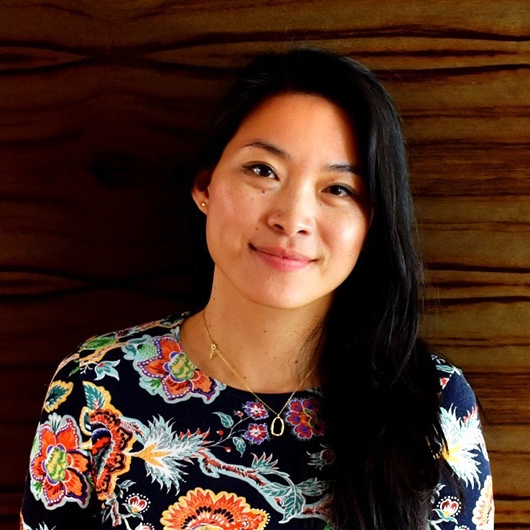
In this episode, I'm joined by Vivian Chan, a scientist, investor, entrepreneur and former CEO whose journey has taken her from academic research at Cambridge to building and leading businesses. We explore the realities of being a founder and CEO, from navigating investors and boards to the personal cost of building a business, and why, above all, it's important to not lose yourself along the way.
Well, hello Vivian. Thank you so much for joining us Today on the IdeaSpace podcast. It's great to have you on.
[00:00:57] Speaker B: Thank you for having me.
[00:00:59] Speaker A: So I'm going to just dive straight in.
You've been an investor, a scientist, a founder, and a CEO. When you first made that jump from scientist to founder, which of the things that made you a good scientist actually make being a founder maybe harder?
[00:01:17] Speaker B: That's a great question.
I think especially when we, for context as a scientist here, it's very much on the postgrad level. So I did my PhD and there we spend years obsessing around really hardcore research and trying to find, in a way, data that is all within controlled experiments.
So there is a lot of research, a lot of strategic thinking, a lot of planning involved behind each experiment before you do execution.
And so where it really starts to clash, I would say when you start to find yourself in the founder role, is that to be an initial founder.
And I'm kind of highlighting initial because I'll talk about some CEO is another transition stage. But when you first find yourself as a founder, you also realize that actually you gotta unlearn everything you've just learned.
So the pace and the momentum and the movement is actually really valuable.
Especially in the commercial world and in the business world, it is more about how fast you, you can find some answer, but it doesn't have to be the absolutely accurate or the most perfect answer.
And most often you actually find yourself not having all of the data and not having all of the answers, but having to make a leap of faith, doing execution, doing projects and managing and delegating before you have all the data that you have.
So I think that was one of the harder mindset shift that is quite relevant across a lot of the founders I see, especially now that I sit on boards and board advisor, I see a lot of technical founders, a lot of scientists who are in that transition stage.
Yes. There is also this that you know the language in terms of having to learn a whole set of vocabulary that is commonly used in the commercial world.
And it seems like everyone's speaking a slightly different language.
But once you've learned that language, the commercial and business language, I find it is more the mindset and the shift and sometimes the personality that really kind of in a way really helps you shine as a founder or, or really makes you question whether you should be a CEO.
Maybe I should highlight that the transition, being a scientist to a founder.
Yes, there's that movement and momentum at that unease of not having everything.
But if you choose to be a CEO, then that's another transition. If you just become a founder and stay within the technical realms, that often has a lot more flexibility.
But often even there, especially the CTO or even a CSO in terms of Chief Science Officer often still needs to have a lot of the commercial lens.
So even if you're tackling a technical problem or a technical issue, it has to be practical.
You need to have practical solutions that are within a budget and within a very clear, defined scope of time, which is often very short time sprints as opposed to you don't have three or four years of a PhD to figure that out. And I've seen that because I have seen even co founders of mine and technical founders where they want to get it absolutely right and the solution to a technical problem becomes a world class research solution which doesn't fare well in the commercial lens. And I don't need a whole practical solution. I mean, I don't need the world's best analytics tool to help me report board reports from my board meeting. Right. So it's having that level of common sense that sometimes it's learned and some people I find pick it up question quicker.
But often I would say the transition is also in the exposure of the environment.
So I think I did my Ph.D. well, I think I did do my Ph.D. at Cambridge and I definitely know that from the ecosystem perspective it's very entrepreneurial. Right. You've got places like Baida Space, but you've also got other communities where scientists can expose themselves and meet other people in a much more informal, relaxed kind of environment to gradually adapt themselves into A, is a founder role something I want to do and B, within the founder role, Is it a CEO role or do I want to stay within the technical realms? Sorry, that was a long, long answer.
[00:06:35] Speaker A: No, no, it's really interesting and what we'll do is we'll pick apart some of those because it is interesting the difference with a founder and a CEO and that, and that transition into that role, which we'll touch on also the board side of things, because it's something that many very early stage founders, you know, they undervalue the importance of a board early on or, or maybe some overvalue it and pick the wrong one. So be interesting to talk about that.
Just winding back. So you finished your PhD. Can you tell me what, how that transition went into the startup world and, and how did it feel to you as a youngish PhD entering into that world?
[00:07:14] Speaker B: Yeah, so I think what was really fascinating was definitely the Cambridge ecosystem.
So I end up having QTech or friends within the biochemistry reach out to me and actually draw me into that ecosystem.
[00:07:30] Speaker A: So before my QTech, sorry, just to leap in. QTech is the
[00:07:35] Speaker B: Cambridge University Technology Enterprise Club.
[00:07:38] Speaker A: Yeah.
So there's a number of student societies that help entrepreneurship and some more technical. Yeah, okay. Just for listeners who might not
[00:07:46] Speaker B: know.
Exactly. So during my PhD days, it was definitely the two larger societies that I was aware of was QTech and Q.
And Q was the Cambridge University entrepreneurs, I believe.
And Q ran more competitions for pitch events and matchmaking, I believe. Maybe things have evolved since. And then QTech, what we did was we ended up having really, interestingly a whole team that was kind of built like a company.
And this came from MIT.
So some of the founders of QTech kind of mirror some of the student organizations at MIT.
And QTech's main role was to put on a couple of events, but the main thing was to put in an annual conference. And it's one of the world's largest annual conference created by students.
And we would have a management layer so we actually get appointed and nominated CEOs and then I forgot the other titles now, but there was like a management layer and then underneath that you had five separate teams that were reporting to the management team. You would have the content team, the marketing team, sponsorship team. So we didn't make sales, we would try to secure sponsorship.
So actually because of my venture capital background Prior to my PhD, that was where some of my biochemistry friends who were already part of QTech were like, oh, Vivian, are you curious? And you know, joining us?
And this is one of my friend who was actually the VP of content. So he was running the content stream and was looking for new, new, new people to join him.
So I did and I ended up joining him and then helping shape a little bit of the content of the annual conference. And then the following year I ended up finding myself being nominated to be the CEO.
And so I think, yeah, I wasn't even in the society for that long. And then I realized that I had this opportunity. People nominated me. There wasn't much competition and I guess I didn't really know what I was putting up my hand for.
And the next thing you know, I got voted in as a CEO and I was a CEO and then there was this whole hierarchy of, you know, management team and the five, five sub teams which really was my training of actually being a CEO.
I had no idea. But it was where I learned a lot of intrinsic motivation because a lot everyone was not paid.
Everyone were mainly PhDs and postdocs or other industrial professionals within the Cambridge science parks, et cetera.
So everyone was donating and investing their own time for QTech.
And so I've had to learn especially on how to align really bright minds to all move towards one common goal when they're not being paid.
And I'm asking them to, you know, contribute evenings and weekends and do all this stuff on top of their day job.
[00:11:04] Speaker A: A lot of social skills, motivation, leadership type qualities that have to come out when, when people are.
[00:11:11] Speaker B: Yes,
[00:11:12] Speaker A: yeah. Offering their time.
[00:11:13] Speaker B: Yeah. And so I think all of a sudden when I'm thrown into, I think it was like teams of 10 eventually I was managing 50 people.
[00:11:23] Speaker A: Wow.
[00:11:23] Speaker B: And I found myself as a third year PhD student A, trying to wrap up my PhD, but then B having to manage a whole team of 50 and obviously some of them like I, I had VPs that report to me so I didn't like directly. So there's was so much, you're right, soft skills that I had to Acura, which I think was one of the reasons why I became a CEO eventually.
But I think that's the soft skills I was talking about earlier, which is how the other scientists could get exposure into activities and events and societies like this so that you could be building other skill sets that are beyond technical.
[00:12:04] Speaker A: Yeah, that's a fantastic learning experience for later. We'll, we'll sort of concentrate on your sort of later stages as well because there's so much to your career that we could spend ages on it. But to go from VC back into research, just really quickly touch on what, what motivated you a to enter the VT VC world and then also to go back into academia.
[00:12:28] Speaker B: Yes. So very good questions. I don't think I was pointing planning to be in vc.
I always was someone who didn't Want to follow the status quo.
So I did my undergraduate in Australia in University of Queensland and it was one of the first few years that they were launching a Bachelor of Biotechnology degree. And what was really interesting was yes, it specialized in drug design development, but it very much combined the drug side of the research, the impacts, but also the business side.
So I found that mix really fascinating and that was where I started with that. So therefore even in my undergrad I was already being taught about intellectual property, the different types of ip, especially the ones very much in startup world and, and therapeutics and spinouts. And then I ended up finding myself networking and there I was networking within the university, but there was also biotech because given my drug design and delivery biotech undergrad and eventually ended up networking myself into a VC role.
It was just like perfect timing when someone was like, well we're actually looking for someone. And it was a VC called Uniseed.
A very interesting structure where the LPs were the universities.
[00:13:57] Speaker A: Okay. And LPs just for those that aren't
[00:13:59] Speaker B: aware. Yeah, yeah, they're the investors of the fund were actually the universities themselves and then an American pension fund who's done really, really well for themselves.
And so the remit was the first look, right. Of a lot of really interesting spin outs and research that coming through.
So that was my VC experience and I really kind of networked my way into that. So again I felt like it was a lot of learned skills that I had to just expose myself into.
And then throughout that process I also start to see there was a little bit of a ceiling.
So all of, pretty much all of the major investment managers, including the CEO had a PhD, had a doctorate and so they were an expertise of that specifically domain and then they were applying their technical knowledge in assessing deals and due diligence and seeing whether this has strong intellectual property for it to be a higher business valuation.
So I start to see that and then I think this is the real human side of me. I was actually just really, really bored one weekend and I was just stroll, strolling on the laptop and I saw from the University of Queensland news that a professor from Oxford had came home and was setting up his lab and he was doing needle free vaccines.
And I was very fascinated about the whole technology and I thought, oh, this sounds really cool. So as I was looking into it a little bit more and then he was like where, you know, the page was his coming back, he's got a bunch of grants, he's going to be setting up his research group and I was like, I don't, I was never someone who was like, I really want a PhD, right? I was still in VC. I could see where things were. I was learning a lot. I also got to see the management layer decisions, the investment committee level decisions and the board level decisions.
But then with this professor coming back, I was like, this delivery, this needle free vaccine was really using gold particles or gold to coat particles, so had stronger density, would penetrate the skin and then go into the bloodstream. And I was like, well instead of looking at his page, why don't I just look at the page he came from in Oxford?
So that's kind of where my logic went. And then I went to the research group that he was a part of in Oxford and then I was bold and maybe this is a part of the personality that made me an entrepreneur. I just sent an email and I was like, oh, here's a, here's, here's what I've been doing, here's my background.
And then they actually responded and they said with someone like your background with their drug discovery, it might be interesting to help with looking at the skin penetration side. And they're like, when you apply formally into our research group and then also apply formally to University of Oxford and then we will move things forward. And I'm like, oh well, is that easy? Might as well look at Cambridge.
So really it was very much a, this is the actual sequence of events. And then so I ended up looking at Cambridge. I'll fast forward this a little bit, but I didn't find quite a bioengineering PhD. But during my undergrad at University of Queensland, I had a really good professor, Professor Jenny Martin, I still remember her name to this day. And she taught X ray crystallography as a module and I just really liked X ray crystallography when she taught it. And then so I emailed again some crystallography groups and then they ended up forwarding me to my professor and they were like, yeah, we've got some grant money and like we could use someone like you, so why don't you apply to us and to Cambridge and see what happens. So fast forward, I ended up having two offers, both from Cambridge and Oxford. And then Cambridge came through with a Commonwealth Scholarship and I ended up going to Cambridge and I really enjoyed my time at Cambridge. So that was how the transition of VC to PhD happened and I found myself wanting. So I had, I still have the same kind of core values for me as a person and that always dictates where even though these silly Decisions may have seemed silly, but it was always through the lens of is this making an impact?
Am I learning and being curious?
And I, at that age I wanted to see the world.
So the opportunity to do a PhD at Cambridge ticked all of the above.
So I was like, even though I was thinking to do a post grad, I was like, okay, why not? So I came over and that was how the whole story came about. And then I found myself in the entrepreneur ecosystem and the rest is history.
[00:19:12] Speaker A: That's fascinating. I mean there's so much, well, there's a lot to unpack there about you and your personality and certain characters, characteristics about being bold and going out there to, to, you know, you've talked about the networking side of things, just going ahead and writing to someone, sending an email.
And there must be a real sort of entrepreneurs, you know, characteristic there just to be so bold and just to do it and not just talk about it, but actually do it. That seems to have pervaded through your whole career.
[00:19:47] Speaker B: Yeah, and I think it's definitely something that I've been exposed to even through a young age because my dad, through many different careers was also an entrepreneur.
So he. So I mean, he also was in computer science and had a steady job, but he was also doing entrepreneurship type stuff on the side. So I think as a young age I got exposure to what entrepreneurship was about.
Um, and I think there was also a level of either naivety or confidence where I was thinking, what's the worst I can say? Which is they can just say no.
[00:20:24] Speaker A: Yeah.
[00:20:26] Speaker B: And if I don't try, they wouldn't know that I want it. Right. And sometimes even if I don't try and then they offer it or they don't offer it, to me is, is actually a data in itself to kind of go, well, they now have offered me the opportunity. I actually want this, or no, I actually don't want this. And that actually helped me understand myself better.
[00:20:48] Speaker A: Yeah. Yeah. And was there a point where you stopped seeing yourself as a scientist and saw yourself as a CEO or a business leader in some way?
What point was that? Or have you reached that point?
[00:21:03] Speaker B: Yeah, so I would actually say that it was even as early as being the CEO of QTech was where I started to actually have the ideas that I could run my own business.
The ecosystem was great in a sense that it wasn't just the peers that I was working with. It also had angel investors, it also had industry CEOs. It had investors and a lot of them were kind of saying the same Thing which is there's a safe ecosystem here, so why not try?
And I think that ability to be able to try things meant that okay, how do I step out of this transition?
And that mindset shift really helped because I think through QTech was also where I found the other three founders in my first company.
[00:21:57] Speaker A: Okay, great to hear about all
[00:21:59] Speaker B: four of us. Yeah, so all four of us all met during QTech and they all were doing like PhDs and Master Post grads of different types of disciplines. But QTech was what brought us all together because we were interested outside of just academic research and curious enough to explore what this looks like entrepreneurship and also started to meet really interesting like minded individuals.
So that was kind of where that first business really came from.
Um, but that I would say was more like four PhD students who were working more in kind of harmony, if that was called it. There wasn't a very clear like here's a CEO and that kind of thing. It went from like me managing 50 people to me being one of four founders of this company as opposed to the second company was very much. And the first company was Bridge Draft.
Right. Um, and we saw a really interesting niche, but in the second company was where we had to bring in that hierarchy, bringing those titles because we were assigned to go externally, you know, fundraise externally.
[00:23:06] Speaker A: Right.
[00:23:07] Speaker B: And it was, it was very different now that I've seen the two in terms of bootstrap businesses versa versus building a venture backed business, the titles matter, that the pace of the company is different, the, the metrics are very, very different.
And to, I guess to your earlier question, what I've actually had to align for or optimize for, especially in that second company where we were going out, I literally only started the second. Well, I only incorporated the second company until I had an angel investor say, yes, I'm going to invest now. Prove to me you can round out the rest of the pre seed money in like a month or something.
And once I actually had the money pretty much then I incorporated.
So then I went straight into the CEO role which was very, very different to four PhD students creating a company, taking some projects on, creating revenue, growing from that.
And the second was launching straight hardcore into a CEO role with investors, with the board. Right. And that early CEO learning was very much optimizing for alignment.
So I had to learn very, very quickly about how to manage stakeholders that are not just my team.
So all the stakeholders which were my board, my investors, keeping everyone aligned on the same page and often or not everyone else has Got so much going on that they kind of forget where you're at and you repeat yourself 50, 50 times. But you're trying to also move them forward whilst also managing your own team. And so then there we actually had to hire as opposed to in QTech and the first company, the team grew organically. It wasn't like we have a bunch of cash, now we have to go and hire like a team of 10. It was very, very different dynamic. So we had to also learn how to do hr, what a good hiring process looks like, what a bad hiring process looks like, decide how many stages of interviews are needed.
Eventually, over time, I also changed a lot of our interview process, but that could be a whole hour in itself.
But really, I think the main theme of that early stage CEO was optimizing for alignment and alignment across many different layers very quickly.
There is the managing side, there is a delegation side.
There was a clash. I had to learn in terms of a mind shift, which was sometimes you will find yourself wearing many hats. I mean, often as an early stage CEO, you will be finding yourself wearing many, many different hats. But some of those hats might clash.
And that's when it becomes hard for you to decide what to do.
Because you are still a founder, you are now a CEO, which also means that you report to, well, the management team and the board, but you are now a director of the company and you also have fiduciary duties and you also answer to shareholders and sometimes wearing those hats may clash.
Some decisions I found where I want to tell my team something, but my lawyers have advised me not to.
[00:26:37] Speaker A: Right. I guess you've touched on boards. So the first, how long did the first startup last for?
[00:26:44] Speaker B: Six years.
[00:26:44] Speaker A: Six years. Okay. So obviously long enough that you're learning a huge amount as that goes on and that's growing and you understand that sort of slower organic growth. Yeah. So what happened towards the end of that and then what made you say, okay, I'm going to venture back the next one and try and scale it a little quicker?
[00:27:04] Speaker B: Yeah. So I feel like the first one, because it was bootstrapped, it kind of grew organically. We were all bringing in different clients in and this was like a PhD and postdoc network.
And it was really fun because One of our USPs was that we would always be finding multidisciplinary groups together to solve a project.
But also over time, some of my other partners or my other founders were starting to look for other full time jobs because they were like, well, you know, they didn't really just set out to be an entrepreneur. Nothing wrong with that. They, that just wasn't. They wanted to learn a lot more in industry that was, you know, a few of them, they wanted to go corporate.
And so I felt like we were assigned to. It was. It became. I don't like the term lifestyle business because I don't think there is wrong. Nothing wrong with it being a lifestyle business but it was a bootstrap business and it was really exciting and we brought in revenue and. But I felt like everyone's. It wasn't the main target or the main full time job that a lot of the other founders wanted to do.
And so this other opportunity with a second company came as well where they came knocking because I was part of the whole president of QTech. After you become president you become chairman of QTech as well.
And then through that there is just still a lot of that ecosystem at play.
And through that they were like well actually do you want to build a second company?
So we were still running that first company while I started the second company whilst the other founders were also doing the other things.
And the second company leveraged a little bit of the same PhD and postdoc network work. But I actually use that as a core IP for what we call the augmented intelligence in the second company.
So this is back in 2013 where we were very early in terms of machine learning but what we wanted to do was actually to democratize scientific information.
So we were doing various different things in terms of aggregation and compilation. But ultimately it was summarization of research articles for non technical audiences.
And in order to do that machine learning algorithms weren't where it is now.
We also ended up having our PhD and postdoc network which we grew that to about 4,000 in like 30 countries to actually. And we had a editor in house to actually teach the scientists how to summarize because they were very, very technical and then go back and forth to actually have IP in terms of the framework of what a good summary would look like and then publish those at masses so that that then feeds into the machine learning algorithm.
[00:30:01] Speaker A: Wow.
[00:30:02] Speaker B: So that was where the beginning of the second company came from. And then whilst we were running that, then the first company we ended up exiting that in six years and that was really fun. But then the second company was more of a headache for me to really enjoy any of that.
Especially because by that time we'll come back to exactly to the bored point.
I kind of launched straight in and I had a whole board from day one. Of that second company, which meant that. And I wasn't really.
I also took money for the sake of taking money because at that point it was seen as you're a successful company if you take investment.
It was seen as a milestone and seen as a symbol of success.
Where we now know that is not often the case and you shouldn't actually be relying on fundraising for survival.
But because of that, I also said yes to investors. The angel investors I've had have always been great, but I've. It was my own learning as well where I ended up taking VC money.
Some of them were family offices, kind of slash VC money.
And there was very much technical, well, I would say misalignment on the board.
But in hindsight that was also because I wasn't very clear on what who I wanted and I wasn't doing enough thinking and clarity on what this second business should because the first one I didn't feel like we needed that much.
It was growing organically. It was great. We had a lot of fun, we brought in different projects and we exited that. And so it felt like it shouldn't be, not like it shouldn't be hard. But I just underestimated how different I venture back to business was.
And by doing that, I ended up having board members that also seem to switch a lot. So even with one of the funds, they would switch their representation every board meeting. So you just spent all your time updating that first person and spending a lot of time updating your board rather than actually using your board as a constructive extension of your team.
[00:32:25] Speaker A: That's really. And I think that
[00:32:26] Speaker B: was the really bit that I think a lot of people still to this day are seeing their board as your bosses where it really shouldn't be if you do it right and you have clarity. And this is why I now work as a board advisor, mainly to help other founders not make the same mistakes I did, which is how do you get clarity sooner and hold on to that clarity on what success looks like for your company?
And it's never too early to do that. Some companies, like, oh, I'm, I'm like pre seed and et cetera, fair, you need to kind of work out a couple of other bits of your business first.
But once you actually have some traction, you've got some funding, you've also got other stakeholders that you have to account for. Now especially I would say from seed stage onwards, I would really urge you and encourage founders to start having very clear definition of what success looks like. If you were to fast forward this to five or 10 or 20 years later, what does that version of the company look like and where are you in that picture? In the story? Are you still involved or have you personally exited?
Which is often like, sometimes the founders are like, oh, I didn't know that was an option.
But it's just being clearer to yourself about what it is that you want.
And a lot of founders are very clear on the vision in terms of the impact, especially the scientists or I have also medical doctors and engineers and PhDs that all become founders and CEOs. And they're very, very clear in the impact they want to make and how many, how many lives they want changed.
But what I'm pressing them and encouraging them to think about is also what that commercial success should look like to be able to fund your vision and for you to fund your impact.
And the clearer you can get for yourself, the clearer then you can articulate and communicate that to other people.
And the sooner that you can find the right investor investors and the shareholders and the board to help you get there.
Otherwise, what I ended up doing initially in the second company, before I had some really, really amazing board mentors and also some coaches, was I was just being very reactive and just been like, okay, yep, there's some money here, I'll go trace that. The board said, you know, I literally did like, my, my mate works at gsk, so why not, why don't we go there?
So that was how naive I was. But so then we started chasing and making revenue from B2B Pharma. But ultimately I lost control of my own company in terms of where I wanted to take the company,
[00:35:20] Speaker A: not
[00:35:20] Speaker B: in terms of cap table. But I was very burnt out because it also was very clear to me that this wasn't the business I built it for.
And I was now finding myself selling to pharma, which is not the business I initially built for, with a 12 to 18 month sales cycle. And we're on a setup Runway, like on a common sense level. Yeah. Now that you think back, you're like, hang on a second, how did we even get there? But I think really because I was just reactive.
[00:35:55] Speaker A: Yeah. And how much is to do with kind of confidence? So you're surrounded by a board and that might have almost been dictating beyond your vision because you said you might not have articulated it as well or had that clarity. Do you think your own sense of confidence in what you were doing wasn't there or wasn't enough, wasn't allowed to come out in order to be Bolder with them or.
[00:36:20] Speaker B: Yeah, I think you're right. I actually did have a.
And some of my close friends, especially some of my other friends, founder friends, know this. I went through a bit of like, not like it's a common phrase in the sciences where you've got a mid PhD crisis. Right.
But I felt like I had a little bit of a loss of identity whilst I was in that first couple of years in the second company.
A. I lost a lot of my boldness and my confidence.
There was a lot of imposter syndrome because also, even, especially in that 2013 phase, there wasn't a lot of female CEOs yet.
So there was a lot of expectation that I felt that I put on myself, that I had to act a certain way. I had to be going out at every networking event and whenever someone's asking me how I'm doing, I'm like, we're crushing it. These are the sales and this is amazing. And we're going to be hiring.
It was just.
It wasn't me.
But I had to feel like that was the facade I had to put on in order to look like a confident CEO.
So, yes, I think in a way a lot of that early CEO confidence was fake and I ended up losing a lot of my identity.
And whilst because I wasn't aligned with my own self, I was actually burning out.
And so I was working so hard and my whole identity as Vivian Chan just became the CEO of Sparrow, that was
[00:37:57] Speaker A: even more pressure. Even more pressure for you to have to, you know, carry on the facade.
[00:38:03] Speaker B: Exactly. And I felt like that was. I think it was over, like some drinks with some friends, I started to just break down and I was like, besides being the CEO of Sparrow, I actually don't know who I am anymore.
And that was really a turning point.
And I think that also coincided with the time where I started to develop symptoms of what I now have been diagnosed as discoid lupus.
And this is where I've had to learn it the hard way, which is if you're burning out and you're not listening to your body, you know, you're not actually, you are holding a lot of trauma in your body.
And the body then metastasizes this into inflammation.
And I just was not never paying attention to it.
And even the early symptoms around my scalp was just itchiness and it was red. It was just a red patch. It was a small red patch. If I had gone to the doctors, if I've like actually looked after my health, it probably wouldn't have been a situation, but because I ignored it, because I just went 200% down the CEO lane to the point that it got bigger and then hair started falling out.
So now I have a bit of a bald patch up the top, which is unfortunately now not really recoverable from a western medicine perspective because it's like scarred.
But even to this day, and I do know this because I was silly enough to kind of go, well, by the time I actually got to see the doctors and they were like, we really need to diagnose you. We need you to come in for a biopsy.
So. And I was like, oh, sure, I'll just schedule in this biopsy. So I just literally scheduled in the biopsy like it was an investor meeting in my calendar.
[00:39:56] Speaker A: Oh, gosh.
[00:39:57] Speaker B: I didn't really, it didn't really occur to me what a biopsy, like biopsy is actually a minor surgery on my head until I actually got out of the surgery seat and I turned around and saw a lot of blood.
Did it really hit me that I was like, oh, hang on a second, maybe I shouldn't work the rest of today?
[00:40:22] Speaker A: Oh, gosh, yeah.
[00:40:24] Speaker B: But I had investor calls, I had lunch meetings, I had everything booked out for the rest of the day.
[00:40:29] Speaker A: This is you so intertwined in the CEO role that you've not even. You can't even see yourself where you're at the.
[00:40:38] Speaker B: No.
[00:40:39] Speaker A: Where you've ended up in a health and well being sense. And you're just looking. Not at Vivian, you're just looking at a CEO having to do CEO things.
[00:40:47] Speaker B: Correct, Exactly. I was literally just CEO
[00:40:50] Speaker A: and
[00:40:51] Speaker B: not.
And I feel like that's why I care a lot more now. Working with founders is I don't want them to lose themselves, lose their identity, lose their driver's seat and because once you lose your driver's seat, you lose that confidence and it spirals down. Like I.
Yes, it's. It's the squ. Lupus is a chronic condition.
It's irreversible, but I can maintain it. I had other founder friends running other businesses who had heart attacks.
So the pressure is something that sometimes is self inflicted.
But I now have had conversations with like listed CEOs who, who we kind of say entrepreneurship is an addiction.
It's a self inflicting addiction because you can never say no to it.
And it also is quite interesting that especially the really smart academics, especially people who've done really well, like say everyone that I've met at Cambridge who are doing their PhDs, et cetera, we've all excel in an academic way to get A's, you know, in, in this world.
But in entrepreneurship, you don't win by getting A's.
You win by actually getting Fs and failing and failing really, really fast.
But if no one teaches you that and you don't have the mindset and the mental health and the wellness to change that shift of thinking, then you will take it onto yourself and have a lot of trauma that your body then can't hold.
And I've had to take a long time to process and metabolize that,
[00:42:44] Speaker A: I'm sure. And you know, it's a, it's a lot for you to clearly gone through, but also to share it because these are really important things to share to founders. The importance of being able to recognize when things are getting too much or the importance of having people around you that you can go to and offload some of that weight. And I guess that's why, having you mentioned, you know, important mentors and coaches to you, what would you recommend for founders who might be listening to this to avoid the pitfalls that you found yourself in?
[00:43:20] Speaker B: Yeah, I would definitely. That's a great question. I would definitely, number one, be clear on who you are, even if it's a phase where you don't know. And it will be very often the case you don't know what kind of CEO you want to be. And sorry, I am speaking mainly from my experience as CEO, so there would be other founders and CTOs and CSO roles that might have different experiences, but from my own experience as a CEO, the clearer you are as in terms of your own values, who you are as a person and then also what kind of CEO you want to be is very helpful. To then have clarity around what kind of business you want to be and having that clarity, especially the destination or your success, what destination looks like. And then what I work, especially now with founders, is reverse engineer back.
That gives a whole framework of being able to say no to things and be able to attract the right investors, to attract the right board advisors or board members, ned people and the right sales clients and partnerships because you know exactly where you're going to rather than just saying yes because someone's got a great profile or someone wants to give you $5 million.
And if you go down the reactive route, you will end up losing control of yourself and sometimes your cap table as well. And unfortunately I've also seen that, especially in my VC days in board meetings where we had to just get rid of the scientists who was like professor who wanted to be a CEO. I've seen that too many times.
But I think the first thing is definitely getting clarity.
Number two, surround yourself with people that actually want to help with your learning.
And I think having that safe environment, that safety, both from a professional, commercial safety, but also from an emotional and mental health safety perspective is very important.
And three, I would say whether it's an ED or a coach or et cetera, especially an investor as well, if you can find other entrepreneurs to actually support you in those roles, I would say the better.
I think some of my learnings were that I was taking advice from people who have never built businesses before and they came from different backgrounds and they had different kind of metrics in their heads. And a lot of it was also assumptions that they thought based on what they were told in the fund or what they read on the book versus actually learned experiences where they actually built a business before.
So I would say those are my three takeaways.
[00:46:18] Speaker A: Wow. Well, thank you.
Now you said you weren't going to start another company.
[00:46:23] Speaker B: Yeah.
[00:46:24] Speaker A: So what happened?
[00:46:29] Speaker B: Yes, this is what I mean by my friend and I were like, entrepreneurship is an addiction.
I am always a builder and I think it is also my personality where if there's a gap, I would try to fill it.
And so when the opportunities to work with founders became a real thing, initially through entrepreneurship as residents through techstars, and then now also entrepreneur residents at Cambridge University, co founders at Cambridge through some of those, I realized that I actually really enjoy working with founders and that I could still going back to my three core values, make an impact.
Still learning.
And in a way I'm still exploring the world, but through the lens.
And I would add the fourth one now is I'm having a lot of fun.
[00:47:30] Speaker A: Good, good.
[00:47:33] Speaker B: And I think that's why I realized that, well, hang on a second. From a. I can't. Well, I'd love to keep working with founders. So I now work as a board advisor on a one on one basis. But because there was quite a lot of demand and especially those on earlier stage, I also run now a eight week board level residency so that you can run cohorts. But in order to, you know, pull all of that together for tax reasons, it's better to actually run it through a company. So that's why now I have a third company.
But I would say this is the most fun company. I wouldn't say the first one was also fun.
[00:48:08] Speaker A: I
[00:48:09] Speaker B: would say the first one was also really, really fun. But now this third one it is now. I'm getting so much joy and energy working with really smart founders who are changing lives and making so much impact by making sure that they're not going to be trying to make the same mistakes that I make. So sometimes you have to make them in order to learn.
But at least I can give you some of the guardrails and actually point you and guide you in terms of what have we learned this week as opposed to let's go off and actually waste five years of your company and get yourself into a burnout. Right.
So I feel like in the sense this is a lot of alignment for me personally and professionally, and this brings me a lot of joy.
[00:49:01] Speaker A: That's such a fantastic.
Almost like a full circle of your career, obviously, with lots to go and so much to give. I guess just in, in closing, and thank you so much for being so, you know, generous with your time and sharing your experiences. It's absolutely invaluable for people who are looking at, you know, this is a future being a founder or, or as you said, you must separate the founder CEO, because they're not always the same. If you could sit down with Vivian just before she came, a founder, not necessarily a CEO for the first time, what would you tell her? And would she have listened anyway?
[00:49:41] Speaker B: That's a great question. Would she have listened? Probably no.
I know myself now, but I definitely would say what I been telling my founders, which is don't lose yourself. I think that was the be the one that I probably would try to hold onto a lot more.
Don't try to fake, fake it in terms of being imposter syndrome, and be true to yourself.
Sometimes the body knows the answer before your mind can, and sometimes your analytical mind can actually fathom really interesting arguments for and against.
But if it feels like you want to do something, you want to make an impact, you don't know how, and you just want to try, I would just say just give it a try. Just do it. The worst is that you might fail, but failure is a great learning vehicle.
[00:50:38] Speaker A: Amazing. What a great place to end. Vivian, thank you so much.
[00:50:42] Speaker B: Thank you so much for having me. So been so much fun.
[00:50:46] Speaker A: Well, that was a really interesting conversation with, with Vivian. And what I took away from it was firstly, that being a Great Scientist or PhD doesn't necessarily prepare you for being a, a founder or CEO. They require really quite different mindsets. Secondly, how important it is to be clear about what success actually means to you and to surround yourself with the right people, particularly when it comes to investors. Advisors and your board, but perhaps the biggest takeaway was the importance of not losing yourself in the process.
Building a business can be an all consuming thing, but it shouldn't necessarily come at the expense of who you are.
A huge thank you to Vivian for sharing her experiences so openly, and if you've enjoyed this episode, please subscribe to the Ideaspace podcast, Leave us a review and share it with others who might find it useful. And if you'd like to find out more about Ideaspace, our community, and the support we offer to both founders at the University of Cambridge and within Cambridge itself, or indeed nationally, please visit ideaspace.cam.ac.uk Many thanks for listening and we'll see you next time.
Sam.