Episode Transcript
[00:00:02] Ben Hartley: Coming up in today's Idea Space podcast.
[00:00:05] Matthew Cleevely: My brain had wired itself to be concerned about all of the things that matter to the business, and I couldn't do anything about it. So I had this kind of like phantom stress that. That just pervaded everything.
A successful founder is someone who had an idea, gave it, gave everything they could to execute on that idea, completely independent of whether or not that business succeeded or failed.
That's a successful founder.
[00:00:34] Ben Hartley: Welcome to the Ideaspace podcast. Ideaspace is the University of Cambridge's startup community and incubator. In these episodes, we sit down with founders, investors, experts and innovators to unpack how things actually get built and to share insights on entrepreneurship, innovation and leadership.
[00:00:52] Ben Hartley: I'm Ben Hartley. Let's get into it.
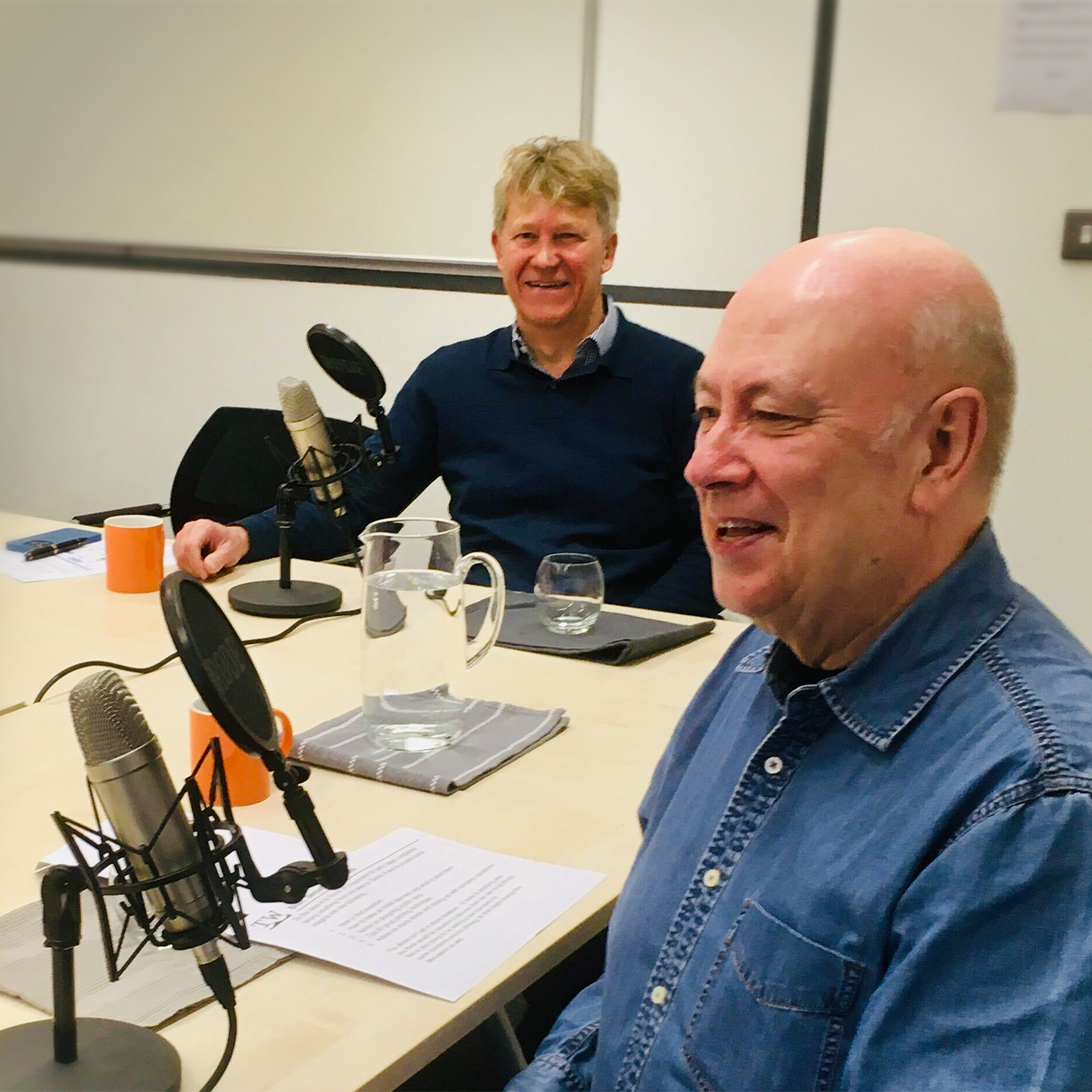
Today we're talking with Matthew Clevely, serial founder, investor, board member, and an important part of the Ideaspace community.
Matthew was last on the podcast four and a half years ago when he was still building 10 to 8. Since then, he sold the company, worked with and invested in other founders, and he's now written a book, the Founders Map, Volume one, bringing together what he's learned along the way.
Today we talk about selling a company and what happens afterwards, why startup advice is so often wrong, and how much of success is actually down to luck, and why the less glamorous stuff, boards, hiring, culture and getting the foundations right really matters. And we also talk about failure, founder wellbeing, community, and what it actually means to be a successful founder.
[00:01:43] Ben Hartley: Matthew, welcome back. Obviously, it's been a few years since we last spoke.
[00:01:49] Matthew Cleevely: Oh, thanks.
[00:01:52] Ben Hartley: So if somebody listened to our first conversation and then met you today, what's changed most in your working life and the way that you think about building companies?
[00:02:02] Matthew Cleevely: When did we last meet?
[00:02:04] Ben Hartley: It was.
[00:02:06] Matthew Cleevely: I mean, I saw you yesterday.
[00:02:09] Ben Hartley: Yes, the podcast actually was four and a half years ago.
[00:02:13] Matthew Cleevely: Wow. Okay. Four and a half years. Which puts us just before the start of the exit process for 10 to 8.
Right, right. What's changed? I'm a bit more relaxed.
I still remember the.
[00:02:26] Ben Hartley: The.
[00:02:28] Matthew Cleevely: The comment.
Stu McTavish, founders of IdeaSpace. He has a lecture series at the computer lab and he invited me to speak about my experience as an entrepreneur. And I get. I've given it every year since the exit, but just after the exit, I was quite strung out. I was quite burnt out. And the following year I gave the same presentation and we had a nice coffee afterwards and I said, oh, that seemed to go better than last year. And he kind of went, yeah, last year you were a bit Weird.
But yeah, stress does funny things, so I'm a lot less stressed. It's nice not having running a company as your. Your personal problem.
And yeah, I'm kind of starting to learn to live not. Not being responsible day to day for running a growing company.
[00:03:16] Ben Hartley: Yeah.
Yeah, I can imagine. So when we spoke last, was there any idea that that sale might take place?
[00:03:25] Matthew Cleevely: So I think when we spoke last, we were preparing to go out fundraising. So I think that's probably why I was so keen to go on a podcast and talk about how brilliant 10 to 8 was. So I don't think I would have known it at the time, but I think we'd already actually spoken to our acquirers.
So in the whole run up, just. I think I talk about this in a book I've written, but the. In the whole run up to raising funds, I was getting inbound inquiries from loads of different people who just wanted to talk and invest. And anyone who's kind of started a company that has kind of tech in the name will know that you get these automated outreach things. And, and my advice is to, if you've got the bandwidth, take a couple of those calls every month or something. Just because you get to talk to people who are working and thinking in that industry and you get known, you get to practice your pitch and you never know what might happen. Yeah, I can't actually talk about the exit process, that's all buried under NDAs and things like that. But it was, you know, I was running a company, I was raising funds, and then an offer came along and we thought very hard about the options and decided that an exit was the right thing. And it was a, you know, to a really great company. So I'm very happy, happy with where the business is.
[00:04:34] Ben Hartley: And what did selling teach you that
[00:04:37] Matthew Cleevely: building didn't probably take a step back and say that I've always sat a little bit on both sides of the fence. So I've always done, or for a long time done a little bit of advisory, helping other people. And so I've always kind of seen how others do things and I've always tried to steal other people's good ideas as much as possible. You know, if they're doing something, well, just copy it.
And so selling companies made me realize the benefit of that there's so many things that you need to have done right and ideally at the beginning, when it doesn't have much cost to getting them right, that you only find out quite how much they matter at the end.
And I think I had some of the kind of, the learning benefits of that as an unfair advantage going through my own exit process.
But I've helped sell a good handful of other companies now.
And it's amazing. It's the difference between a company that has kind of thought about some of the boring stuff that doesn't get none of the kind of exciting, cool topics like going out and doing fundraising and you know, how do you get product market fit? The stuff that all the entrepreneurs, when you start a business, really want to talk about and go out and look for all the boring shit, right? All the, you know, how do you manage your internal documentation? Who has permission to do what, how, you know, how organized are your accounts, how do you do customer invoicing, right, how well are your contracts documented, how do you employ people, your employment contracts? All of this boring shit is the stuff that actually matters when it comes to sell your business. And it's the difference between a process that can be run. The first other company that I sold, I was one person fielding due diligence for 70 people on the other side asking questions, not, not so I'm not talking about 10 to 8. And I could do that because the company was so well run. The entire company was run from basically a wiki, an internal wiki. And no one needed kind of to talk to anyone in the business if they needed to know how to do something. It was all extremely well documented. And it meant that the entire process was really, really simple. And all of those things allow the entrepreneur to have control over what the business actually does. So it's fine. Yes, you're going to go off and get product market fit. You might go and raise money, you might want to go and exit, but you can't go and do those things unless you've got like the connective tissue between what you want to do and the organization you're trying to build that helps you do that.
And that's like all of the foundations that actually matter. And it doesn't matter if you want to sell your business or not by the way, this stuff, because if you want to build a valuable business that doesn't suck you in and take up 110% of all of your waking time, like you will dream about business in your sleep.
If you don't do that, then you'll never be able to step away from it. You'll never be able to have a holiday, you'll never be able to, you know, you know, hand it over to a managing director and then, you know, work six months a year, which is Kind of feasible. But unless you put all of those things in place, you'll never get to that position when you've actually built the thing.
[00:07:40] Ben Hartley: Yeah. Did the exit feel like a success in the way that you had imagined, or was it sort of emotionally different?
[00:07:48] Matthew Cleevely: Want to ask a leading question?
I mean, I've seen. I've seen it with other founders, but, yeah, I wasn't prepared for it. I think the sale process took a little bit longer than I expected.
And so by the end, instead of, like, going out for a celebratory meal, I had half a pint and then just went to sleep.
A few things happened. One of the strange things that happened was I actually started having dreams again. I didn't really realize I wasn't having dreams. That was weird and completely unexpected. That had crept up on me. I could only. I was quite stressed, and I could only get to sleep by listening to Harry Potter on a headphone because I just. If I just lay in bed, there was too much to do, so I had to distract my brain. But the real thing that happened after I sold is suddenly it's like going off a cliff or, you know, just. Just all change. Suddenly I went from being legally responsible for absolutely everything to do with the company, including, like, you know, when the customer payments are coming in, all of the cash flow management, you know, all of absolutely everything.
And then all of a sudden, that wasn't my role. And in fact, there was, you know, there's a CFO somewhere in America who had a team, and, you know, and all of a sudden, all of that stuff just disappeared.
But I was still wired to be stressed about it. So I was absolutely, like. My brain had wired itself to be concerned about all of the things that matter to the business, and I couldn't do anything about it. So I had this kind of, like, phantom stress that. That just pervaded everything. And it was really weird and unpleasant, personally, where you're worried about all of these things to do with the business, but you can't actually do anything about them anyhow.
[00:09:33] Ben Hartley: That's really fascinating. Really fascinating. I mean, this is why it's great talking to you now, and especially with the book as well, which you're so honest and open. I've been fortunate enough to have read the first drafts of it, and you actually open with quite a provocative claim that most startup advice is wrong. Not necessarily because the person giving it isn't honest, but because that hindsight and survivor bias turns that kind of messy journey into quite a neat and tidy story, which, again, As I said before, the book sort of circumnavigates that. Having now been a founder, investor, board member, how should a founder decide which advice to trust?
[00:10:14] Matthew Cleevely: That's a skill, right? And so after I was kind of halfway through this process of writing the book, I went and started rereading a lot of books that I kind of thought and still think are great. But I realized that they do have these slight weaknesses from a entrepreneur's perspective where they'll say, oh, well, if you're hiring, you need to think about hiring industry experts. And entrepreneurs who are outsiders are 20% less likely to hire industry experts. And it's, okay, great, so I'll make myself 25% more likely to hire someone from industry.
It's like just kind of frustration that some stuff kind of lacks that strategic insight. By the way, the strategic response is go and build a network, right? Whatever network you have before you start a company isn't the network that you need to build your company and sustain your company. And building the network is, you know, inside that network are advisors, the people who will give you. Everyone gives you advice is a pain in the ass. But the, you know, your network is, is how you do that. And it's an entire activity, right? It's not a, oh, I go out and do some networking. It's who you know in the industry, who they know, and how you constantly build that and you go and strategically build that and you go and get advice and you try and get better at taking advice. And it is a skill. So there's no answer. And that's, I think, slightly frustrating for some people reading the book, is it. It has a lot of not answers. It says, here's. Here's where you go and put effort in, not here's exactly what to do. But that's part of the other thing, is that you mentioned it. So I'm going to talk about it. But the, the iteration of the book, it didn't end up like this, which is the shiny version that came off the printers yesterday.
Started as something, as a cathartic exercise for me to deal with that phantom stress. So I'd already started maybe 10 years ago writing down advice to founders about how to do share options. Because I just figured out a really good way of doing it for 10 to 8. And I was like, and I've been working on it for years. And I thought, actually, I'm going to write this down. And I've been telling a founder how to do it, and they just hadn't been doing it and so maybe if I give it to them written down, that will change.
And so I'd kind of built up some of this advice and I dropped out of a PhD to start 10 to 8 and I thought, well, I've got some spare time now, why don't I just try and write up what I've learned and build those. Lots of pieces of advice. But the first version of that was, I think partly because I'd just come out of the exit process and I was a bit fragile, was, I'd say, emotionally triumphant, which was entirely filling in for my own insecurities. Right?
Saying, oh, I went through this shitty thing and this, this, this, all this crap went wrong. But then I made, you know, I did this and I did this and here's how we turned it, here's how it went really well.
And reading it back now, it makes for very uncomfortable reading. I gave it to an entrepreneur I trust who I think said the word triggering when they read it. And they're absolutely right. Like some, some bits I like talking honestly about, however I've fucked up. But you know, other bits when you, especially when you're writing, it's very easy to say, oh, and then we did this and it was all great and it is kind of bullshit. And the whole process of rewriting the book from that point was a process of if I'm not finding it painful to dig in to what really happened, then I'm not writing honestly and I should delete whatever I've written.
[00:13:51] Ben Hartley: Yeah, yeah. And so removing that bias, but the
[00:13:56] Matthew Cleevely: bias itself comes from, if you've successfully built a business, the last thing you want to do is to write a book. All your fuck ups, unless you're me and, but, but then no one can learn from it. And if you tell people what a great strategy was or how you read, you know, one of the books that tells you exactly what to do and how you then implemented that. It's, it's kind of, I say that like most, most advice is wrong. Most advice is wrong because it's, it's out of date, it's not relevant to whatever it is you're doing. Taking action is always better than doing nothing. So if the advice gets you to take some action, that's great. And then whether it works may have nothing to do with it at all. Right? Completely random process.
But then if it does work, you'll go, oh, I took that advice and it worked. And you can get these massively reinforcing things. It's one of the things I'm Actually very worried about at the moment, kind of from an angel investor, from a general society point of view, is that we've got some very, very, very successful entrepreneurs who are all of a particular type. And then investors go, well, okay, that type is the successful type. And that's not correct. It's those, the type who have been able to take risks. Right. Entrepreneurs tend to be, look in a mirror, I'm on audio. They tend to be white, middle class or wealthier. They tend to be men. So they tend to be from way more privileged backgrounds because they can take more risks. And that's why you mentioned it. The first part of the book is, well, how do you try and make sure as an entrepreneur you don't listen to someone turning around and saying, hey, I risked it all and I've built an amazing business when in fact, you know, they were not in existential survival mode at any point in their journey. How do you try and kind of put some realism on that and make sure that you have what you need to survive? So you can also be as ambitious as these other very successful entrepreneurs. So part of it is this talking about right at the beginning, what do you actually want? Because no one talks about that or people don't talk about that enough. But then how do you actually protect your downside risk? You know, what do you need to be? Okay, this is the most fundamentally important point of being an entrepreneur. You cannot go out and take big risks to try and, you know, build big things.
If you're in a, if you feel that risk across everything you do. Because the problem is, right, starting a company, your personal identity is wrapped up in that company. If you're a founder of a company, that that's part of your personal identity. That is, I mean, that's a huge psychological risk anyway. But then you need to think really carefully about what do you need from a family, what do you need from your finances, how are you going to manage when things don't work out? Because like 70%, 80% of startups fail. So it's like most, most universes, most, you know, most timelines that you end up in is going to be the one where the business fails. How do you make sure that's okay? So if you end up in the lucky timeline, that's a really big success, not a moderate meh success where you go, it wasn't really worth it.
[00:17:00] Ben Hartley: Yeah, and it's interesting you said lucky timeline because I think there's not enough said about how much luck is involved in success. No, no successful founder wants to say, you know, I was just lucky at this point. I was lucky at this point. I was lucky at this point. You, especially looking back and telling the story, you'd like to think there was a bit of your own talent and skill involved, but luckily, muscles.
[00:17:19] Matthew Cleevely: I mean, where's the. If you're up on a stage giving a talk, you're not going to justify you being there by saying, I was just really lucky. I bought a winning lottery ticket.
[00:17:29] Ben Hartley: But which is often the case with
[00:17:30] Matthew Cleevely: businesses, there's a huge amount of luck. And the other thing I noticed from. Especially from being like, on the investor side, most ideas are highly unoriginal, you know, no offense to everyone starting businesses. And what I mean is that the ideas themselves are on a panel which gets people from Hong Kong over to Cambridge, and they pitch, and it's brilliant because they're brilliant entrepreneurs from a completely different place.
We're all in the same technological environment. And so the ideas are all echoes of each other. And then you see. So you see that the ideas themselves are not particularly unique, and then you look at how people choose to implement them, and then that's where kind of the uniqueness creeps in.
But whether or not they're successful, I think, yeah. Has way more random elements than most people are comfortable admitting to.
[00:18:24] Ben Hartley: So I'd like to sort of go on to other bits of the. The unsexy parts might be the boring parts, but incredibly important parts that are in this first volume. And it might be hiring or culture, ownership, governance and boards. I know you go into boards in some detail as well. There are. They're often the things that really make or break the business, as you said very early on. Which of those did you underestimate first, do you think?
[00:18:50] Matthew Cleevely: The one I never fixed fully.
[00:18:52] Ben Hartley: Right.
[00:18:52] Matthew Cleevely: I'll say. The one I never fixed fully was the board.
So I have been on lots of boards and I'm, you know, I'm comfortable managing boards now. And I know that the board. We never transitioned from a. Well, I kind of categorize it as a nurturing board that you have right at the start. We never really transitioned from a nurturing board.
And so I think that that was. So, from my perspective, that's. If you like, there's. There's things that, you know, reading my book, I go, well, that's. That's advice that I should have. You know, it's easy to give advice, it's harder to take it. But that's. That was the. The biggest gap I had. Things like some of the documentation and Things like that. They made running the company, selling the company, scaling the company so much easier. And I'm now kind of looking, going, well, if we hadn't sold the, you know, the challenges around software at the moment with AI, actually we had a really brilliant team to go and crack that. Now part of a bigger thing that's also cracking it. But it, you know, so it was very mixed. But, but some of the stuff we got really right. Other stuff I got right elsewhere and, you know, boards. We had a very good, nurturing board, which was fine.
But I will say just about boards, it's the, the feedback from the advanced readers was really amusing on this, where some of the entrepreneurs were like, why the fuck are you talking about boards? I'm not interested in that. That happens when people, you know someone's going to invest, they'll give me some directors, I have to deal with it then.
And then some of the experienced entrepreneur, serial entrepreneurs and angel investors kind of turned around and said, can you make this a bit longer? Can you say more about this because it's so important?
And I agree with what you're saying, but can you just say more on this and this and this? And I think that's, that's the difference of kind of experience and a little bit why the book itself is a lot of, I think, unknown unknowns for entrepreneurs kind of. That's why it's a map. It's kind of what are the unknown unknowns? The things that I haven't quite seen yet. I mean, even if you've founded and run one company, there's a good chance you haven't seen a lot of other stuff and how things can go wrong.
Yeah, but the boards is a funny one.
[00:20:55] Ben Hartley: I mean, can you, can you give an example or a story about the. That that might show the importance of getting it right early on?
[00:21:03] Ben Hartley: Well,
[00:21:05] Matthew Cleevely: I'll take a step back and just talk about generally, because I saw this. There's the concept of like business hygiene and getting things right at the start. And there's also just as a, like, you know, move fast and break things.
Moving fast and doing stuff is more important or is very important, but you need to build a sustainable business. And there is a tension that I talk about that is that you need to kind of. You don't need a big bureaucracy on day one and you definitely don't want it, you know. And so a board, when it starts, does not need to be a formal board that meets every quarter and has massive board papers.
It's right at the beginning. It's you find a mentor or someone who is someone who you like going and talking to, who you like the advice of and you meet them once a month and you talk about higher level strategy, about what you're trying to do. That's it.
All right, so it's lots of this is what is the, or you know, financial forecast, you know, become a whole thing with full time employees on them. But you can just forecast zero and it takes five seconds every month. Right. But you still just do plant a little seed of something that will then grow rather than trying to do, I think, organ transplant later, trying to put, put a capability in. You asked a slightly different question, but I just really wanted to get that off my chest. Talking about all of these big structures. Yeah, actually the first board I was ever on, my first company was a complet failure. And it was called.
Well, it wasn't complete failure. It was wound up nicely and very neatly and it was called White Dot Publishing and it was a publishing business. And the board was essential there because me and the other founder were continuously kind of basically saying, oh well, no, if we just do this and this and this, it can still work. And, and we were meeting with the board, looking at the budget and setting down some milestones and we set some milestones saying, well, I think it's like October, if we get to October and we still haven't done this, then we have to wind up, right, there's going to be no source of further funds and we just wind up, we'll still have some cash in the bank and then halfway through November or you know, sometime after we went through that, I was like, we've got another board meeting.
Okay. Actually no, we, we set this in stone. And I think we were, me and the other founder had talked ourselves into continuing and had we not had those board meetings where we had to come out and say, well, what were we planning to do?
What are we doing next? And just, just a slight forcing you to build and keep some direction. You just, it's a bit like kind of walking in a forest, right. Without a compass or something. You just, you find that you just go on a big circle. So it's something that takes you out of that and just keeps you going. So I learned of the value, just that's why kind of not so, you know, boards are really fundamentally important, but they can be very, very simple and very powerful. And then later building a skill as an entrepreneur, operating on a board is really, really important because that's actually where the legal power of the Business and ownership structure is, and if you don't have a handle on how those meetings work and you haven't kind of worked out how to populate a board and how to, how to engage with directors, you can be, you know, have some investors come in who do know that stuff and, and you can end up on the, the outside looking in rather than on the inside. I mean really, really, it can go very wrong.
[00:24:27] Ben Hartley: Yeah. And this, it is great advice because you're right, you know, a founder very early on when they're just trying to work out what their product is and what their market is, they think this is so far in the future. But you're right, it's not. And it's important to get right early and I guess is the same might be for culture or the company culture. I recently listened to a podcast where Brian Chesky, the founder, was talking and he made a really good, interesting point that culture's not about the sort of values that you just write down everywhere and you stick up on the wall and you keep trying to get everyone to refer to them. It's more expressed through the kind of day to day actions, especially with who you hire, who you might promote or maybe even who you might remove. The people within the organization are equally as important to the culture as what you just state it's going to be. And it's also, he was saying that when the CEO isn't there or isn't present in the room, it carries on going. And that's a good measure of the culture. Is that, is that something that you've experienced?
[00:25:29] Matthew Cleevely: I got, I've got loads I want to say, but a story has popped into my head.
[00:25:33] Ben Hartley: Good.
[00:25:34] Matthew Cleevely: I've got an invasive story and I need to keep it anonymous. But absolutely, culture is one of the things I care most about. And I try really hard to help entrepreneurs build a constructive and functional culture. And it's, it's pretty much the most important thing you can do as an entrepreneur. Scaling beyond yourself, he says very quickly as an investor. One of the most interesting tests is to ask for random calls with people inside the potential investee business and see what they say. The company culture, what it, what's it like working in the company, how do you solve problems? What's the culture like?
And I went on a call where I do have to keep it completely anonymous, but I think I had three calls where the first call at the very end, I said, oh, you know, and is there anything else that you, you thought I'd ask about? And they said, oh, you Know X. And I said, oh no, no, I know all about that. Second call. Halfway through dropping it, I'll tell me about the culture around X and how you, how that's dealt with a bit more third call. So what I really want to talk about is X and, and it was all wrapped up in company culture. How, how things were managed, how things were communicated in the business.
And it was, I discovered the biggest red flag in that business, ran away from it very, very quickly. But the other side of that, building a company as an entrepreneur, right, you want to go in to work every day and know that you've got a team who's going to support you building whatever it is you want to build, right? And company culture is the thing that allows you to do that, right? It's fine saying I'm motivated in whatever it is that we're building, right? We're building a job, giant widget factory orbiting earth. Doesn't matter how you actually do that. And the environment that you said is the, is how you're actually going to solve all of those problems. And therefore that's it. So first started 10 to 8 and say that the top. The culture turned toxic. It was, I think I talked about this in the first, first, first podcast. It was, it was really, it became a very difficult place to work. And part of the problem was that we had multiple co founders with different ways of working.
And so from a, from a high level perspective, right, there wasn't a real set culture. And from an employee perspective they could get, they had a like existential problem that it was like, well, they say I should work like this, but then if I go and work with this guy, that's, that's not how, you know. And I'm, I'm, you know, and I was also, I was, I call it the Frank Sinatra school or cargo cult. Two slightly different concepts of entrepreneurship where you're kind of faking it and I was faking it and I was pretending to be someone I wasn't specifically organized. And so people knew that if I asked them to do something, there was a good chance I would never, ever follow up on it until months later.
And so that was my particular problem.
The culture wasn't set.
Everyone worked how they wanted to. There were massive disagreements. And every time we've tried to fix a problem, we fixed it in a different way. I come to realize that that was. So we had this thing called tinypulse. He sends out anonymous surveys every week of like, what's it like working here? All this stuff and we were doing all the fun things. We had a ping pong table, we did outings.
So we, we were, we're doing all the fun things. And then people would say, are we.
I didn't like this at work, or we need to do more of this. And we'd fix everything and everything was fixed differently. And every time we fixed stuff, it would get worse, not better. Somehow the system as a whole would get worse.
We, we had the privilege and luck of me screwing up a funding round and running out of money and going down to three people and which was, I think, you know, I talked about it on the last podcast. I'm not going to relive it too much, but pretty much the most difficult professional experience I've ever had.
And.
But through that process, when we rebuild, we put culture front and center. So a very lovely engineer had kind of already come to me and said, I think whilst leaving, not quite whilst leaving, but he printed out our company culture document, which is exactly the same thing as he said right on the wall, here's a whole set of values. And he scored me, us out of 12. And he was quite rightly pointed out that out of the 12 things that we said we were and did in our company culture, we did two and a half.
Right? It's pretty humbling anyway, but years later, what we did, rebuilt it from scratch, put company culture front and center. Bit of help from my brother, who cares about this extremely deeply and has also got his own business.
And we just, we made it simple. We're open, honest, transparent, helpful, collaborative. Slightly starting to forget, which is brilliant years later, but. Right. And that was. And we defined culture and this is really important as how you contract to solve problems.
That's it, Right? So culture is how you solve problems in the work environment, Right? So it's not some ethereal thing of like how we're dynamic and innovative. It's like, no, it's how does the culture. And that's my test now, my litmus test. Does a company have a company culture? Does it help you solve a problem and is it used to solve problems?
If not, it's bullshit and it's pointless, right? So really simple example, if I asked you for help in my company, which was open and collaborative and helpful, all of those nice things, and you said, oh, it's not my job, I don't know, you would then have a slightly stern word with or with me or your line manager who would tell you that's not what the company culture says you should do to any problem someone reached out to you for help. You say, well, probably this person might know. Do you want me to write to them or do you want to contact them yourself? It's kind of, it's a very small difference, but it completely transforms how people work together.
[00:31:29] Ben Hartley: But it also must matter who you hire. And that's why hiring and culture are so intertwined. Because you could write perfectionism as a company culture. You can say it all you like, but you won't necessarily get perfectionists unless you hire that sort of person or that sort of mindset. So likewise, hiring people who want to work collaboratively and who are more honest and open can shape the culture in some sense. So I think people underestimate how important hiring is in setting the company culture.
[00:32:01] Matthew Cleevely: The kind of rough test that we had was.
And that's the slightly almost sidestepping the word culture and the slight baggage around the word culture itself. But it's like, how does your company solve problems? And can this person thrive in that environment and help build that environment? And yeah, absolutely key and should be front and center because if someone has the skill and experience to do the job and can thrive in that environment, then they're a perfect fit for the business.
[00:32:30] Ben Hartley: Yeah, right.
[00:32:31] Matthew Cleevely: But if, if they can't work in that way, that means they can't work in the team that you've set up, then they're not going to be as productive as someone else who you're interviewing who can.
So it becomes a, yeah, fundamental pillar of how you hire. But you also mentioned hiring in general as a.
Hiring is not a one off, it's a system.
And it's, it's who, it's like every single thing about what you do, where you post job ads, what language you use, how you filter candidates, which candidates you bring to interview, which candidates you accept, how you do reviews, right? Annual or 6 monthly or whatever, like actually reviews, how you deal with people when they leave or when you terminate their employment because of performance issues or you know, something's not working out.
Everyone in your company sees those.
And so they tell everyone in the company what you think is acceptable and what you're looking for. And so every one of those things is an opportunity to either reinforce culture or completely it up and say, you know, if you do everything just like as and when in Scattergun and you don't write down anything, you go, okay, we need to hire this person. We'll just go and try and hire this person. Shove some ads on LinkedIn or Indeed or something, right? And then the next one will Go to a recruitment fair or go to a recruiter and say, we need this person and write a job from scratch, you completely destroy that capability.
And that's, again, going back to those seeds of really basic things you do early on. It's not a big, complicated bureaucratic thing. It's a couple of sentences in a document somewhere in a shared folder, right, that says, oh, we're going to look. You know, here's our, here's our culture. It's four words, right? Here's. Here's where we're going to recruit and here's. Here's what we recruit for. You know, and then you just change it over time and it leads to that consistency and everyone sees it. But also the other thing you need to think through in hiring is what this all looks like from the candidate's perspective.
A successful candidate is the only person you care about and you want them to experience the culture that you say you have and that you want to have so that they join, not only so you find the right person, but so that when they join, they've got that expectation and then they force you to be better. Right. If they join and they say, well, actually you said this and it's not quite right. Or that you just want them to have that expectation in their head and that helps you be better.
And that's. That's really important.
[00:35:07] Ben Hartley: It's interesting. Yeah. You're almost talking about like. Like he did as well, in the sense that it's cultivating and, and pruning, I think he used. It's almost like you're constantly shaping. You're constantly shaping it.
[00:35:17] Matthew Cleevely: Yeah. And it's not a.
There's no perfect system. It's always imperfect. You always fuck up, you always mess up. And it's, it's more about how do you keep going and. Yeah. Continuously work at something. And that's the, the slightly boring thing about boring things, whatever, is that, you know, you have to continuously work at the things that you need to do. You can't just do a thing and then move on.
[00:35:41] Ben Hartley: Yeah.
So the, the, the book itself I'm kind of interested in, you know, I don't know, overly talk about it because, you know, people can certainly buy it as of.
[00:35:52] Matthew Cleevely: Yes, go and buy it. It's brilliant. You can preorder it now.
[00:35:54] Ben Hartley: Great.
[00:35:55] Matthew Cleevely: On Kindle. I think you can pre order the print edition. Not on Amazon yet, but that's coming. Actually, I don't know when this podcast goes out. It's definitely available on Kindle and Amazon pre order or Order.
[00:36:06] Ben Hartley: Yeah, great.
[00:36:07] Ben Hartley: Fantastic.
[00:36:08] Ben Hartley: And people will be able to learn about the things we've touched on. But I'm also interested in the writing of the book and the process of it. How did you set about making the map?
[00:36:16] Matthew Cleevely: Well, it was originally going to be a.
How to put it a guide, basically saying, here's what to do.
Well, I already had how to do options. Here's how to run meetings, here's how to do agendas, here's how to run a board meeting, here's how to do xyz.
And then I started, and I already had those.
And then I started thinking, well, okay, gonna write a book. I will start by writing down all the random bits of advice that I've got, single sentence kind of stuff that I've got stuck in my head, like, culture is not a ping pong table, you know, and mechanically, I had a spreadsheet, I wrote down all of these things and then I created a Google Doc off the back of them so it's all linked. And then I just, in my spare time, in between meetings, because this is just a spare time activity, I would just kind of pull open this spreadsheet and think, well, either I'm going to add. Add in a piece of advice that just occurred to me that I give to founders, or when I give presentations, people ask questions. I was like, oh, I said that and that's worth putting down, or I dive into something that I was thinking about at the time and I go and improve that bit of advice. And it ended up, I think there's about 200, 300 lines in that spreadsheet of random bits of advice. And then they started to kind of bunch together. Some of them are whole chapters of the book now and some of them are single sentences because the whole process has been very iterative. This is version five, I think. Yeah, getting, you know, some feedback on, I think the version that you saw. And thank you very much for being an advanced reader. You know, someone came around and said, you don't talk about this. Can you put anything about this? And I was like, I'm sure I did. And sure enough, somewhere in that kind of massive mess of hundreds of documents and things, I got some stuff. And it's just so. And then it's become very easy to write about things. I am not a very good writer. It doesn't come naturally. But after a few years of doing this and getting feedback from people, that's the really important thing, getting feedback of what I've written, I think I've found my voice, which is quite sarcastic and self deprecating.
[00:38:24] Ben Hartley: Yes. Really dry. There's a lot, there is a lot of humor in it which makes it, you know, I've read other. It makes it actually really enjoyable. Okay, we're gonna have to wrap up soon. This sort of time has raced by. I'm interested. Which one idea from the book do you think would help a founder next week?
[00:38:40] Matthew Cleevely: Like kind of immediately entirely depends on the founder.
There's two things that immediately spring from volume one.
One is dealing with those shit moments, right. So stuff always goes wrong. And just have a little bit of a plan in place for what you do when stuff goes wrong. And that can be as simple as knowing who you're going to call if something goes wrong. Have you got some directors? So you get on with a mentor that you get on with if you've got your co, founder, whomever, just making sure you know that if something goes wrong, you're going to reach out to someone and you're going to stabilize yourself and you've got a plan to stabilize yourself in the first minute or two minutes of something going completely, catastrophically wrong. Because stuff always goes wrong and it can be all consuming and distracting. I think the other one is, I'm going to say for the moment I say boards and just have someone who you meet regularly on the outside, who's outside your business but knows about business, who you talk to every month. And you just say, here's what I said I'd get done last month and here's what I'm planning to get done this month. And that's it.
[00:39:48] Ben Hartley: Great.
[00:39:49] Matthew Cleevely: Those, those two things are pretty powerful. And then. Yeah, the other one is take culture seriously when you start building because it, it really matters.
[00:39:57] Ben Hartley: Yeah, great summaries there. And be worth just guess really briefly, just talking about the importance of community or surrounding yourself with people who are maybe going through the same journey as well. But you were at, actually at IdeaSpace early on. Did you get a lot from Community and those people around you?
[00:40:15] Matthew Cleevely: Yeah, for me, IdeaSpace has been like a platform, foundation and lifeboat.
I mentioned the reboot. So, you know, it was a place where we could scale the business. But it was also a place where I could go when I was going through a lot of.
And I wanted to be around people and I could be around people who are also working on their own businesses.
So they weren't in my company, but they were going through something similar and just being in that community and being able to either have high level, you know, slightly vacuous vanity conversations you just say, oh, hi, how are you? Or occasionally, you know, saying, oh no, I'm having a really shit day. And for people to kind of be around the people who know what that really means has been extremely important.
[00:40:59] Ben Hartley: That's great to hear and something that is reflected in the founders I see day to day. A final reflection, if I may. So after everything you've built, sold, invested in and written down, what does being a successful founder mean to you?
[00:41:12] Ben Hartley: Now?
[00:41:14] Matthew Cleevely: It makes me want to dig up a text message I sent to a founder. A successful founder is someone who had an idea, gave everything they could to execute on that idea, completely independent of whether or not that business succeeded or failed.
That's a successful founder.
And I know lots of very successful founders. And then I also know a few people, few founders have built very successful businesses.
[00:41:45] Ben Hartley: That is a fantastic place to end the podcast, Matthew. Thank you again and hopefully might get you in against Talk when the second volume comes.
[00:41:55] Matthew Cleevely: Or just get Matthew Bot 5000.
[00:41:57] Ben Hartley: Oh, the Matthew bot. Yes.
[00:41:59] Ben Hartley: Finally there is, on Matthew's website there is a Matthew Bot. You get to chat as if you're chatting to Matthew, the writer of the book, about anything within it.
[00:42:11] Matthew Cleevely: Yeah, I mean that's one of the fun things. Once I've built this massive repository, both of the book and of all these notes, is handing that finally to an AI and synthesizing it down and using that as pre training material for a chatbot. So you can chat to the fake, fake book. You can chat to the fake book. It is told to try and sell you the book at every possible opportunity.
[00:42:32] Ben Hartley: Right, okay, you're going to get sold to, but go. It's fun anyway on that. Matthew, thanks again.
[00:42:38] Matthew Cleevely: Brilliant. Thank you very much.
[00:42:41] Ben Hartley: So, just a few things I took
[00:42:43] Ben Hartley: away from that conversation.
[00:42:44] Ben Hartley: First, just how much luck plays a part in building successful startup and I guess how easy it is looking backwards to turn that luck into a neat and tidy story about the decisions that we, that we might have made. Second, that some of the things founders perhaps find least exciting things like boards, documentation, hiring, etc. Can actually be the foundation that allow you to build and scale something properly. But I think the thing that stayed with me probably mostly was Matthew's definition of a successful founder.
Success isn't necessarily about the exit, the valuation, or even whether the company ultimately succeeds or not. There's something in simply having the courage to take an idea and give it everything you've got to actually make it happen. And perhaps that's something we should all celebrate a little bit more. Anyway, thanks for listening to the Ideaspace podcast, and we'll see you next time.
[00:43:40] Matthew Cleevely: Sam.