Episode Transcript
[00:00:04] Speaker A: Coming up in today's Ideaspace podcast, people
[00:00:08] Speaker B: don't spend enough effort just making sure they get the mechanics of running the business itself right.
It never, it never crossed my mind that I would stop trying to make the business a success.
But I think had something else gone wrong, I can't quite think what else could have gone wrong at that stage, but had something else gone wrong that had taken the decision out of my hands, then I'd be doing something.
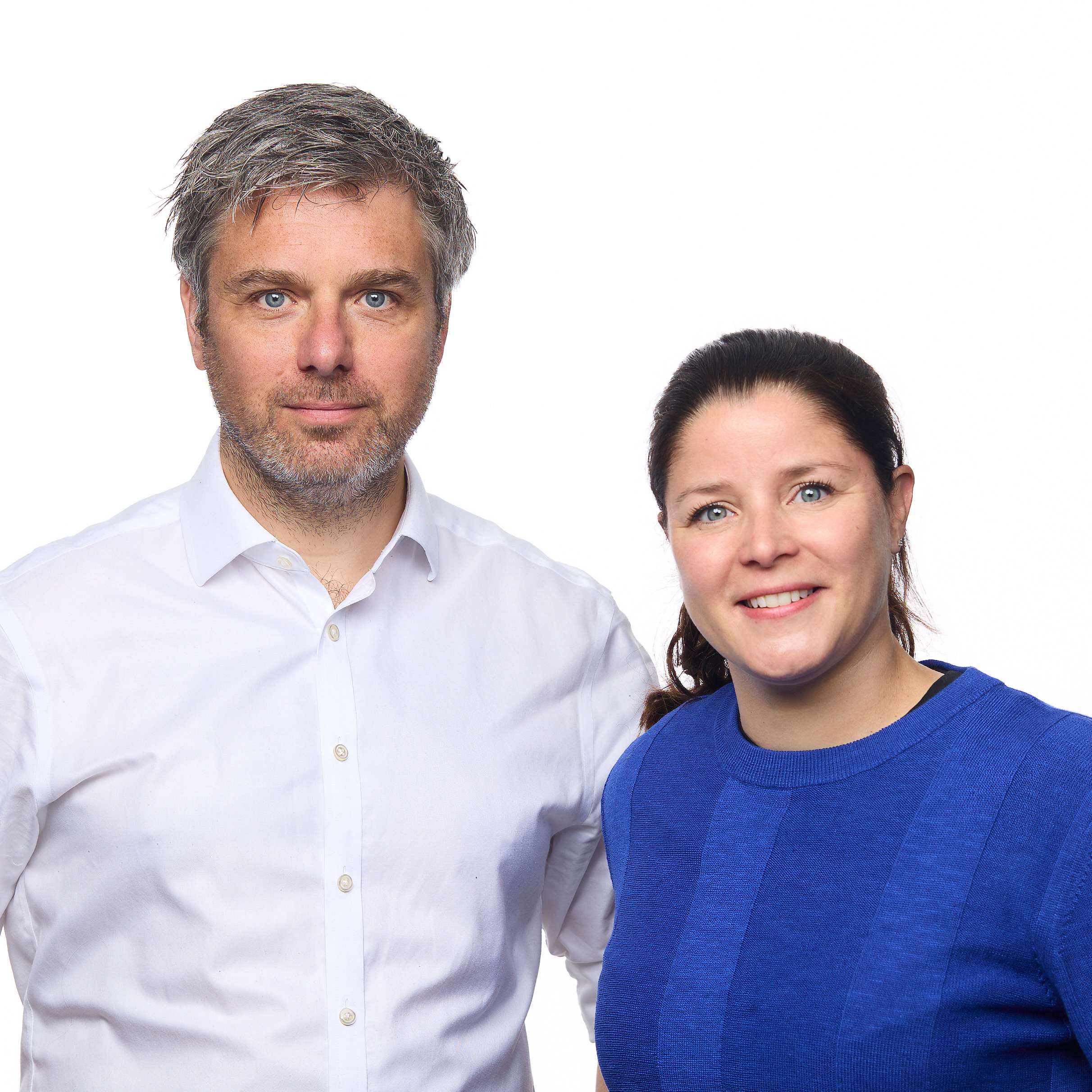
[00:00:34] Speaker C: Welcome to the Ideaspace Podcast. I'm Ben Hartley, head of IdeaSpace. IdeaSpace is a community of entrepreneurs, founders and their teams, many of them working
[00:00:43] Speaker A: alongside each other in one of our
[00:00:45] Speaker C: three offices based in and around Cambridge.
Our members share knowledge, experience and expertise to help themselves and others in their high impact venture creation.
In this episode we're talking to Matthew Clevely, the co founder and CEO of 10to8, an online booking system and scheduling tool used by thousands of people and organizations around the world. Matthew is also a mentor and advisor providing innovation and strategy expertise to startups and he also helps develop policy in the areas of entrepreneurship, innovation and growth.
As part of our startup story, we wanted to find out more about the founder, delve a little deeper into how 10 to 8 came about, and to hear Matthew talk honestly and openly about the mistakes made and the lessons learned.
[00:01:29] Speaker A: I guess the first question actually would be, did you always want to start up a business? Is it something that from a young age you had a passion or a desire to do?
[00:01:39] Speaker B: Yeah. So I think most people growing up kind of when they look at summer jobs or jobs that they might want to do to supplement their income or things like that might, might get a job like my sister did at Starbucks, or go and find something that pays by the hour. I think from when I was too young to legally work, I would be writing to companies on the Science Park. I grew up here in Cambridge and I'd be writing to companies on the Science park that I thought were interesting, asking for a job doing literally anything. And I think my first job at a Cambridge company, I remember getting marched out of the building on my second day because the head of HR fell, found out how old I was, wasn't allowed to be sitting in a dark room dismantling computers and updating the asset register for this business.
And yeah, so that's kind of been so startups has always really been a part of my life. I mean, winding back even further. I come from an entrepreneurial family.
My father started and run his own businesses and conversations around the dinner table would often Revolve around know, crazy estimation questions, you know, strategy questions, things like that. So it wasn't normal dinner table chat either when I was growing up. So I kind of, I've always been interested in businesses, always been interested in going and working for businesses. So I've, I think it's always been there. I, yeah, I designed a mouse mat, I built an accounting database to make my own temporary job redundant.
I did that in an early cycle computer game within the accounting software which is quite, quite a nice little easter egg.
I did some, I did some patents on some biotech stuff. So looking at how you identify diseases in certain areas, managed to do something vaguely novel.
Yeah. And then I went to university.
[00:03:33] Speaker A: So all this was pre. University.
[00:03:35] Speaker B: All pre or during the summer of university.
Yeah, yeah. So and then I started traveling a bit, but yeah, and then I, and then I came to Cambridge, came back to Cambridge from the other place and I was, you know, every Tuesday would be at the, the entrepreneurship. CFL run entrepreneurship talks on Tuesday, Tuesday evening. So always attending those with a couple of friends who are equally kind of eager to start a business. And it's kind of funny because we didn't know what kind of business we would start. We just see lots of opportunities and naively thinking, oh that'd be interesting and that'd be interesting.
And at the same time I think I worked part time. Yeah part time for another couple of companies on the Science Park. So after undergraduate doing postgraduate I certainly thought that, you know, I can just, I've got a lot more spare time now because I'd be treated like a grown up and I'll go and work for startups formerly part time. So that's what I did while studying here for a diploma and then masters in economics.
Then I started doing a PhD at Imperial in London and that's when I started to get really itchy feet because I've been thinking about startups for ages, working with startups with friends, sketching out ideas for businesses, lots of which other people have done and done very well, which is kind of nice to see that people that there was something there.
I never think I'd be able to execute most of the businesses that we dreamt up.
Yeah and then whilst at Imperial me and a friend started something called 10 to 8, which was an appointment scheduling business and that's kind of how 10 to 8 started. How it really started was there was a dentist called Bruce who really hated the fact that about 1 in 10 of his patients just didn't turn up and it meant that he had to. If he wanted to be busy all of the time, he would have to overbook his surgery. So then if one day everyone happened to turn up, he'd be working until 9 o' clock at night and people would be waiting for hours and hours in the waiting room. And if he didn't do that, he'd be sitting there for hours and hours twiddling his thumbs or his hygienist would.
And so he wanted something where people would actually turn up on time to things and have the information they needed at their fingertips. And we spent a lot of time looking at dentists and how they operate and we realized that it was representative of a kind of more general problem with scheduling businesses where you have businesses who are quite organized and their customers and they provide a service to these customers and their customers aren't that organized or they aren't as organized as the business and the business can't turn around and say we schedule everything on Outlook, we use Google Calendar. Here's how we organize our time. Look in your diary and turn up. That's not how a business to consumer relationship works. And most of these businesses are small. Scheduling businesses are small. Hairdressers, doctors, dentists, even banks can't turn around and say here's how you should organize your diary.
And so that's how 10 to 8 was formed. We realized that what you need is a communications tool based around a diary. So a communicating diary that was always working in the background to keep everyone informed of where they needed to be when that communicated with customers on their own terms. And that was. We came up with the idea of 10 to 8. So Tom, who was doing his PhD at Cambridge, paused it for a bit, started it full time. I was doing it part time whilst doing my full time PhD at Imperial and I think I, I can't remember how many years I lasted, I think a year and a half at Imperial before I jumped ship and, and went 10 to 8 full time.
[00:07:17] Speaker A: And did you?
Fascinating.
[00:07:20] Speaker B: And there's another startup in between.
[00:07:22] Speaker A: Well, we'll come back to that.
But that's really interesting the fact that you've obviously a got a slight family connection in it and then this background of wanting to find something new. Itchy feet. It's almost like you're just wanting to constantly find solutions to problems with 10 to 8. Do you think there was already that in your mind that there was a solution that you had and then you found the problem or did you really just with Bruce and this issue with the, the scheduling and booking, did you See that and just think, right, there's a problem I can try and fix.
[00:07:57] Speaker B: Yeah, much more. The latter. Much more. Here's a really interesting problem that isn't being fixed by the technology being used in the industry at the moment that you can easily fix using handswave modern technology and lasers and. Yeah, so that's good.
And also this problem can be generalized up from dentists. We have very few relative to our other customers dentists using the system because they've got very, very detailed bespoke software running their practices and that's a very difficult market to penetrate.
But that the general problem, Sorry, yeah, the specific problem that they face can be generalized and is actually widely applicable. So we realize that there's not just a few dentists in the UK having this problem, there's a global problem. Millions of businesses losing billions of hours facing this problem that we can actually solve. So we set about trying to solve that problem, but we were looking for problems to solve.
We hadn't had a solution and were looking for something to solve it.
[00:09:08] Speaker A: Interesting.
It sounds like you already knew that there would be a wide customer base for this or different customers, albeit with the same sort of problem.
Did you realize at the time how applicable it would be across many different
[00:09:25] Speaker B: sectors and yes, and I think that brings us to our first mistake
[00:09:35] Speaker A: is
[00:09:36] Speaker B: that if you can reduce no shows in any industry where you've got a scheduling problem and we can there eliminate no shows with our smart communication system that's pretty universal. So we thought, right, there's a universal value add here. Right. Horizontal strategy. We'll make this available to everyone, the world will buy it and it's going to be huge. And you know, so we were a jack of all trades, master of none.
And looking back I think one of the things I'd really change was focusing down on one particular use case.
Someone asked me recently, what would you do differently? And I was thinking that horizontal strategy, it's great. We're a freemium SaaS business so there's a free element and there's a pay for subscription service and that's great. We've got tens and tens of thousands of businesses who use us every day and thousands of paying customers, which is great.
But if we really zeroed in on a particular use case, not a sector, not a vertical, not saying we're going after dentists or we're going after banks or we're going after alpaca farmers in New Zealand or piano tuners in Birmingham or something, we've got all of those kinds of customers.
Not those kinds of verticals, but a use case like, you know, I want to book online for this kind of appointment or I want to allow someone to book with me for this kind of thing, focus on that use case first and really delivered something excellent in that kind of particular area.
I think we would have made our lives easier down the line. The other big mistake we made was we, it's a really big mistake. When we started in, in 2011, 2012, so kind of nine, 10 years ago, we spent a long time thinking about how applicable this was to lots of different sectors and how brilliant it was, obviously, and how this was an absolutely enormous problem. And one of the things we did, we did two kind of interesting mistakes. A lot of time planning and dreaming big and not a tough time kind of getting on with things. And then also not enough time testing what we were building with customers. So we tested the ideas with customers a lot. We did tons of market research. We said, you know, if it looks like this and if it does that, what do you think?
And it's kind of really taking, taking product design from the kind of 80s and 90s school of waterfall, rather than, you know, what we do now, which is basically, you know, if we're going to do something, it's. We work on it. If it, we only do something if it can be deployed to production within a week, otherwise it's not worth doing.
The upshot is that we spent over a year building a product that when we put it in front of its first user for user testing, was unusable.
So then we were solving the problem, the UX UI problems, when we should have been solving them at the same time as product development to develop, because you can develop a minimum viable product, but if you're not testing that with users as you're developing, it's almost a complete waste and you have to throw everything out and start again. So then once we've done that, we then had to have the same learning process and make the same mistake selling to new customers.
So our acquisition channel, customer acquisition channels at the time were purely digital. So go out and spend some Money on Google AdWords and things like that.
And again, that entire process could have been built and tested and iterated as we're building the product.
And instead we built the product, then made the product usable and then built the acquisition side.
And as a result, it's kind of the logical way, if you were to sit down naively, having not done a business all the way through before and kind of done a project plan, you might have done it like that.
But realistically that's not the efficient and everyone knows this is not the best way of building a business. You test how you acquire customers and then you try and get the flows right and you get the product fit and you try and get the features that they want and then you actually change what you're doing depending on what features they actually really want and you iterate very, very quickly. That's not what we did at all at the start. So deep breath. That means that we're still implementing features. Now that I can pull out a spreadsheet from 2011 and show you that it's on that list. So we haven't implemented a single feature I don't think that we didn't dream up in before we actually even founded the business.
[00:14:23] Speaker A: That's really interesting.
And I suppose with hindsight it's hard to know how you would have known any different at the time. You touched on another startup that you were involved in, had that.
Was that before this time?
[00:14:42] Speaker B: Yeah, it was. I took a break from my PhD actually to see about starting a publishing business.
And again it was helping someone who had some fantastic links in the art world to scope out thematic art publication. So a high end, only a couple of editions a year.
Working with kind of really interesting artists at the time to have to create bespoke things to go along with each issue. Tremendously expensive things, great fun. Went to the Venice Biennale, you know, was treated as press because I was the editor or publishing editor. I can't remember my title now, but some fancy title.
[00:15:20] Speaker A: It felt good at the time.
[00:15:21] Speaker B: Yeah, it was great, it was great fun.
But you know, kind of that dawning on dawned on all of us that raising the money that we needed in order to launch such a publication just after the financial crisis was going to be too much of an ask.
[00:15:38] Speaker A: Sorry, I was going to say did you. Did you take lessons from that experience to turn to 8 or is it.
[00:15:46] Speaker B: Well, the most horrible lesson I learned was, and I think this is the most important lesson, which is about business hygiene, which is more about accounting and processes than anything else, is that
[00:16:03] Speaker A: I
[00:16:03] Speaker B: end up using driving a car analogies all the time. But you need to know where the road is and your position on it.
And so you need to know the state of your accounts, what's going on with the cash.
So that publication business, we raised a very small amount of money, hired one person and then after about six months had to let them go. And we finished with, you know, £1,000 in the bank that Was, you know, then went on administrative fees. Right.
Kind of. So it's kind of nice. Existed, didn't exist anymore. Everyone was paid fine.
And that's such an easy thing to get wrong. And I've, I've now. So I've been involved in lots of other businesses and investment rounds and things like that. So I've. Yeah, I'm currently advising a handful of other companies as well. And that's, that's one of the things I see as an issue is that people don't spend enough effort just making sure they get the mechanics of running the business itself right. Because it's so easy at the very beginning when, especially if you're, you know, maybe you're a couple of software people or a couple of technology people to think that that's what the business looks like. That's not what a business looks like. A business, when you look at just an off the shelf business, employs 100 people, has a few people in the accounts department, you know, has a, has someone in the legal department. And those are all really important bits of a well functioning business and covering off those. I saw how important that was for this publishing company because it, for various reasons it could have gone badly wrong in terms of the debt position and it just didn't. And partly because of my planning, but partly because of luck, that certainly paid off with 10 to 8. So having made all of these mistakes, you know, going waterfall, matching demand and having these issues is with 10 to 8.
We had got a team, quite a big team of 14 people and we needed to close a funding round in order to keep going.
And that funding round fell through and that was quite dramatic for the business.
And I had some business hygiene factors in place. It's one of the things plan to live forever but have a plan B and a plan C and a plan D.
So our plan B, when the funding round fell through was the stall for time. So we redeployed the entire engineering team as contractors.
So we used the network, found some contracting to do, someone who matched our stack and started doing some consulting. And that held the business in stasis for about five or six weeks until one of the engineers who was involved was quite rightly a bit disgruntled and left. And all of a sudden the mathematics didn't add up anymore. So we're right up to the wire
[00:18:51] Speaker A: and
[00:18:54] Speaker B: we had to let pretty much everyone in the business go. It's a very tough week. At the end of that we got down to having £270 in the bank.
Wow.
[00:19:03] Speaker A: So how long in terms of timescale was that from starting?
[00:19:08] Speaker B: Well, we kicked off a funding round maybe in April of the year, and then it fell through in June, July.
Yeah. And so I think we had the consulting in place for the end of June. So in July, August, some point in the very end of July, I think beginning of August, things hit the fan.
[00:19:29] Speaker A: Wow.
[00:19:30] Speaker B: But it was that hygiene factor that we absolutely planning on succeeding in the funding round.
Absolutely. Trying to get everything focused, but at the same time being able to say, okay, here's a plan B kept everyone employed, gave us enough time to try and find funding for the business.
And then when that didn't work, we knew exactly when we had to pull the trigger on plan C and go down. And then we've been agile, we've been lean startup. We've been three people, you know, slowly building, consistently growing for the last four, four years or so, and to where we are now, which is about 30 people kind of.
[00:20:13] Speaker A: Yeah, I mean, that's, that's quite a roller coaster. And I suspect there'll be many people who, when they hit that point after the, you know, you back down, you were up to 15 or so people say, and then back down to just a couple that many would have just throwing the towel into that stage. Did that ever occur to you or was that on the cards or was it never even in your mind that it might, you might have to just fold the thing up and move on something else?
[00:20:44] Speaker B: Well, I kind of try and view everything as an experiment. Right. And so the experiment of 10 to 8 was to work out if at that stage was working out, if there was a market for this that we could address and how big it was. And there was signs that there was a decent market. There was. And that people were willing to pay and the mechanics worked.
Just that we didn't have the funding to make it work with the company in the shape that it was.
So we had to adjust the structure of the company to work with the funding structure that we could put in place to keep those experiments going. It was really tough.
Really, really tough.
I think it took me maybe six months to recover mostly, and it's still very difficult.
Yeah, it was an incredibly tough time. It's not a pleasant thing to have to let, you know, 10 plus people go because you failed to raise money, but it's what happened. And yeah, and everyone was very understanding and good, but it was just the toughest thing I've had to do so far.
[00:21:59] Speaker A: Incredibly difficult.
And also just to pick yourself up again. Dust yourself off and keep going. So you've got to deal with the emotional side of that, which is going to hit you hard. Letting people go and feeling that you might have let them down.
[00:22:13] Speaker B: Well, that was one of the nice things about IdeaSpace is that I was coming in having felt that really the world crumbled around me and I'd let it because the funding round falling through is on me.
[00:22:25] Speaker A: Right.
[00:22:26] Speaker B: Had I been pitching better, had I been pitching more actively or to different people or changing our strategy, maybe I could have raised some funds, who knows? But that definitely felt like it was on me. So the whole thing crumbling felt very much like it was on me. And coming into ideas space and just sitting with other people, working on other things, sitting in an office where there are other people, not going into an office where there are lots of empty chairs was really important. And I think that's part of the thing, is just other people, when you're working in a startup, whether they're ones working with you or you just happen to be in the same place as them is really important.
[00:23:08] Speaker A: Yeah. I think we find that with IdeaSpace just being a part of a community, A, for sharing ideas and experience and knowledge, etc.
And B, just in the kitchen area, just shooting the breeze about how tough your day's been or their day's been, or even about something completely different. But having a sense of community, whether it's specifically business advice or just living and interacting with other people, seems really important to a lot of the startups.
Do you think that there's a certain characteristic, I mean, you personally, obviously, as a youth, as a young man, pre university, you've always had these ideas and ideas for businesses, and you're always trying to seek solutions to problems that are out there.
And you talked of it as like an experiment. Everything's an experiment.
Do you think there's a certain characteristic that makes someone an entrepreneur like yourself? Or is there.
Is it something else that you can't really explain?
[00:24:14] Speaker B: I don't know. Right.
I've seen people who are very good, the best people who run businesses are people who improve what they're doing all the time.
So it's kind of. There's the starting point of where you happen to start.
But I think the most important thing is, is how people improve themselves over time. So some of the best people to work with are always engineers because they're ruthlessly focused on their own productivity.
And so they're always kind of trying to make themselves more productive and will have really great conversations about how to make themselves more productive and better people and work more in the team and how to get the team to be more productive and get more stuff done.
And that's really the most important characteristic.
Yeah, I'm trying to think of, I don't really want to name check people, but I've seen people who are, you know, who start from a very high base, you know, very eloquent, great communicators, great natural leaders who then don't improve, who don't develop the, you know, the organizational skills or the operational skills to then infill what they're missing and then grow and become better and better and better. And I've seen people who lack almost every skill, you think, to run a business, but who can then kind of put parameters around what they're doing, what skills they're missing, and go out and hunt those skills and consciously develop them and they end up as the best possible people to run businesses and great leaders. And so, yeah, I think some people start with natural advantages and predispositions to start businesses, but I think it's about that kind of improvement. And that's the other thing that's nice to see in businesses. And I hope we do it well at 10 to 8, and we have periods when we do it well and periods when we do it not so well is always looking at how you do things and improving how you do things.
So whether that's your accounts and making sure on top of things or how you organize your development or how you organize people or what activities you do socially, always looking at what you're doing and how you might improve it and trying new things.
[00:26:29] Speaker A: Interesting, thank you.
You talked also just then about the hiring of people or if there are gaps and that I'm interested in the hiring process. I know lots of people are in startups. A lot of questions we get here are how do I find a CEO or what's the. You know, I've got a cto and what's the.
It's often about recruiting and hiring other people because they've worked on a project by themselves. Yourself, you were with a friend or a colleague and some are on their own, some do have colleagues they're working with. But that next step to bringing in people from the outside or seemingly from the outside world.
How did you go about that? Did you find that to be a, an issue when you started out or not?
[00:27:20] Speaker B: Yeah, made loads of mistakes there.
[00:27:24] Speaker A: Yeah.
[00:27:24] Speaker B: I think the biggest obvious mistake we made early on was feeling under time pressure to find someone and letting that time pressure affect our decision making.
[00:27:34] Speaker A: So
[00:27:36] Speaker B: you've got a plan, you want to execute it quickly. You promise shareholders you're going to build something in the next six months and you need to hire someone to do it.
And then someone comes along and they're not quite good enough, but you're under. But it's taken you, you know, two months and you haven't found anyone. And this person's kind of almost works, but you think there's not quite a cultural fit or maybe, you know, maybe they're brilliant, they're not quite a cultural fit and you think it's going to be difficult working with them, but you think, no, tell you what, we're under time pressure. We really need someone, let's go for it.
That is a mistake.
I always think that time, time is not a relevant pressure in business. It's more about resource management. You know, kind of time is money, but actually it's how you spend money and how effectively you spend money over time that matters, not time itself.
And yeah, so we let time pressure kind of creep into our hiring process a few times and that's, that's. I can't think of a time when that hasn't led to a mistake.
Both, you know, looking for other people. I know looking for jobs, you know, feeling under time pressure and, you know, taking the first job offer that comes to them or. Yeah, this way around and hiring.
I'd say that's the biggest mistake with hiring.
The other one is thing that I think is difficult for different people, which is the firing side and being really, really harsh.
I think that it's, it's being really, really fair that's important.
We kind of have a thing at 10 to 8 now. I mean, we try and we try and lift people up and that's really what we do. So once we bring someone in, once they pass probation, if there are issues, it's more about addressing those issues rather than pushing someone out the door and trying to find someone else.
We're. One of our kind of core values is how we cooperate with each other.
And so that's very important.
But in order to let someone into that environment, you need to be very careful about, you know, someone who you do want to kind of make sure you're supporting in that kind of culture. So, yeah, so passing probation is usually quite an important step.
And so I think that there's, I think people are too, people are too keen to hire people in general and not, not, not filtering enough there. And then the other one is when there's a not A good fit, not being clear enough why and being absolutely clear on why. And then, you know, you've got two choices. One is you can say, well, it's not working, so let's just, just call it a day. Or you say it's not working. Here are the reasons, let's work and address them. But either way, you have to be very, very clear about what's going on.
And we. I struggle with that still.
I'm not going to pretend. I think it's one of the things that really annoys me when people give advice about businesses is they'll always give advice about how they choose to remember whatever happened or how they choose to present themselves. Right.
Everything that I say is how I wish we do things. Everything I say that's good, about 10 to 8 is how I wish we did things, not about how we actually do things. Because we all still make the same mistakes and we just try and make them less.
[00:30:46] Speaker A: I think that's really important for everyone to hear. Anyone who's listening, who is involved in business, I think that's just excellent. They need to hear that. Everyone needs to. Everyone needs to hear that.
May I also ask how all of this might have affected you personally or in relationships or family life? Because that's something that people all are dealing with as they go through this journey with their various ventures.
Is it something that has a. Or has had a big effect on you personally or have you had a base there that's been good support and you've been able to deal with those highs and lows?
[00:31:31] Speaker B: It's been very different over time.
Really different over time. So the year in which 10 to 8 went from kind of 14 people down to 3 was also the year I got married.
[00:31:43] Speaker C: Right.
[00:31:45] Speaker B: So I got married. I was actually. So I was working on restructuring plans whilst on the honeymoon, which is not, not a great work life balance. But no, I mean, it was much worse for other people in the business. So I'm not going to pretend that anywhere near a sacrifice. It was fine, just needed to do it. The.
Yeah, it was. There were some really difficult times, especially I think later that year my wife was pregnant. Work was extremely tough and she was also ill, she had a chest infection. So it's kind of. I was trying to manage work and things like that. Yeah, that was very, very difficult personally. But I think one of the upshots is I've become quite fiercely defensive of my private life and private time. So I try and get up early in the morning, start work between 7 and 7:30 in the morning I stop at 6:30. I won't work past 6:30. I've got family time then and then if I need to work, I'll work then in the evenings and I don't work on weekends unless, you know, I really, really have to.
So I've. I've got really defensive of that.
[00:32:48] Speaker A: That's really insane to hear because.
[00:32:49] Speaker B: And I do it to protect my mental health. I can't, you know, and my family,
[00:32:53] Speaker A: I. Yeah, I think there's otherwise misnomer in the, in the press or Personas that we sometimes see in public and press about this.
Working all hours and working through the night and working late and sacrificing. Of course there's lots of sacrifices. But it's interesting you mentioned that and being so protective over that. And I personally think that's something that people should listen to early on, knowing that whilst there will be times like on your honeymoon where you're having to do stuff and that's inevitable, but being able to see longer term that there is a way to actually manage it because otherwise it becomes unmanageable. And for your own personal mental health, psychological health and it doesn't help the business if you're not able.
[00:33:47] Speaker B: Yeah, I think that's the thing is psychologically you end up writing the business a blank check in terms of your own time. You devalue your own time especially.
Typically people start businesses, they tend to be a bit more footloose and fancy free.
Start a business with fewer commitments and the sacrifice is usually their social time or time. I'd usually be sleeping at 11 o' clock in the morning as a student and so it's very easy to do that and it's very hard to claw it back.
I think that's part of the things that people don't quite ask themselves enough is what do I need?
So I need some time to. I need some time to myself.
I need XYZ salary. You know, I think salary is also one where I have quite a lot of respect for entrepreneurs who turn around and say actually I need to earn exactly this in order to survive. Often that's a lot more than the acceptable entrepreneurs, minimal salary because it's truly what they need, which is. And it's important, it's really important.
Yeah, I feel I've got more to say on that but I can't quite put my finger on it.
It's a difficult one but, you know, if you want to work all hours a day, that's absolutely fine. But it's. Yeah, it's Is it valuable?
I feel I discovered this personally for myself whilst I was an undergrad.
I can't work effectively for kind of more than about five or six hours in a day. In order to work effectively for five or six hours in a day, I will need to sit in an office or a library or somewhere for 12 hours, maybe 14 hours.
But I'll be sitting there. But I'll actually only get, you know, I might, if I had a really good day, get seven hours of work, real work done. And I think the same is true in terms of productivity in a kind of. In an office or work environment, that there's only a certain amount of hours that you can truly be, especially with knowledge, work truly productive in a day.
And actually by. By putting hard, hard borders around it and being. Being quite protective, you don't reduce it very much.
And again, having burst capacity, I know that when needed, in a crisis or something like that, I can work. I've got enough space in the week for 80, 19 hours a week and it will be, you know, and I can sustain that for four to eight weeks, but then has to go back.
[00:36:15] Speaker A: Yeah, that's interesting. Thanks for sharing that. I think it's. I think it's often a part of business that isn't necessarily talked about as much, this intertwining of personality and the business itself.
So what's next for 10 to 8 or what's on the horizon?
[00:36:38] Speaker B: Is there anything, hopefully, touchwood growth?
So the last few years we've been consistently growing and growing quite quickly. So really the challenge for us at the moment is how we continue that growth trajectory.
And we got larger and larger clients, more and more interesting clients, different use cases used in different areas across the world.
So it's really about continuing that growth trajectory and quite excited about what we're doing with the NHS at the moment. So we're doing lots of scheduling in the nhs.
Getting people to turn up to their bookings is quite important and there's a huge amount of money that's lost that the NHS loses because people don't turn up to their appointments. And lots of poorer health outcomes as a result of people forgetting to turn up to their appointments as well. So going in there is really nice and quite rewarding for us. And that's something we've been doing a lot recently and a few other areas that I can't talk about that are
[00:37:40] Speaker A: very exciting, Very exciting. Well, for the next chat, that'd be great.
And in terms of, personally for you, whether it be within work, 10 to 8 or personally. Are there any personal goals or ambitions that you're looking to achieve?
[00:37:57] Speaker B: I dropped out of my PhD and I miss academia.
So I think that's hovering in the background as something I'd like to pick up again and finish.
But that's probably the only thing.
Yeah.
Making sure the 10 to 8 gets to the next stage. I kind of feel like we had a 10 to 8. 1.0, 1,028. 2.0 was the reboot and we're currently working on how to build 10 to 8.3.0 which is kind of the really big notable success or notable business if we get there. But that's the kind of next stage.
[00:38:30] Speaker A: Very exciting.
A couple of other questions just around the subject.
If you think back, can you think of any sort of real fork in the road moments where something changed or you changed something or you were had something in front of you that was a either way situation, one fork in the road or other that's led you to this point that could have led you down one that was less successful or more successful or more successful indeed. Yeah. Very well put. Yeah.
[00:39:12] Speaker B: Yeah. Well, I think that there's. Well, there's a few. There's one. When we started 10 to 8, we came here somewhere in the computer lab just over there.
[00:39:24] Speaker A: Got a.
[00:39:25] Speaker B: A few people together. So some, some doctors and dentists and had some pizza and beer. Showed them some wireframes and said should my friend Tom pause his PhD for a year and do this?
If you say yes, you have to invest £10,000 in the business.
And everyone said yes.
So that's how we got really started at 10 to 8. I think that had people not put up their hands, we wouldn't have done it.
[00:39:53] Speaker A: That's amazing.
[00:39:54] Speaker B: Which is quite interesting. I think when we did the reboot, I mean you asked me about whether or not it was, you know. So I think it never. It never crossed my mind that I would stop trying to make the business a success.
But I think had something else gone wrong, I can't quite think what else could have gone wrong at that stage.
But had something else gone wrong that had taken the decision out of my hands, then I'd be doing something else now.
But I can't quite think what that would be.
Any other crossroad points? I don't know. I want to answer your other question about kind of what are my personal ambitions? I need to get a Water water rocket over 100 meters with a GoPro in it. That's a personal goal. I've managed about 40 or 50 meters.
[00:40:41] Speaker A: Stop all your other work until that happens.
[00:40:44] Speaker B: It's important. Well, I bored everyone in the company last week. That was my Friday. We do every Friday, last Friday of the month, we do a presentation. Someone in the company gives a presentation on something.
And Liam, if he ever listens to this, ducked out two times in a row by booking last minute holidays on a Friday when he was meant to be presenting. So I had to step in and I presented on my water rockets. So I've been building, I've been building them for the kids and for me. But yeah, it's important stuff. So it's just where you get.
Everyone does it when they're a kid. You have a bottle, you have a pump, you put a little bit of water in it, you pump it up, it gets some pressure and then you release it and the water goes out the back and the bottle gets thrown up in the air.
The record is like close to a kilometer up the height, honestly, from.
[00:41:36] Speaker A: Is it certain? It must be a specification.
[00:41:38] Speaker B: Is there no. People. People make their own thing out of carbon fiber.
They're really quite dedicated.
But yeah, it's. I think you can do it. I think you can do it just with normal plastic bottles, I mean fusing them together and building a kind of a longer rocket thing. And I think you can, you can get to 100 meters just with a bicycle pump, basically. And that's what I'm trying to do.
[00:42:00] Speaker A: Right. You've given me something to start for my kids because they would love that.
I was wondering if you have a favorite quote.
Doesn't matter if you do or don't. Have you got a quote or quotes that you'd like to share that you might live your life by work wise?
[00:42:24] Speaker B: Personally, it's an interesting question. I don't actually.
I would say that I love quotes from people who have failed. I think that so much of building a business is about failure. And when you turn around and say, oh, you know, my business came within an inch of going under and things like that, I say, oh yeah, so did mine. So did mine. Of course it did.
The story of all these successful businesses is stories of businesses that almost failed but just about didn't at some point.
So it's nice to read about really spectacular failures. It makes me feel a bit better.
So was it the.
I like and I have a guilty schadenfreude reading about things like Theranos and some of her quotes are quite spectacular in hindsight.
I don't like having a plan B. By the time you admit that you've got a plan B, you've already failed and all of these things. Things. Yeah. Well, I think that's also what happens when you give someone whose first business is, you know, you give them a lot of money and tell them they're brilliant and they start believing it. I think a lot of mistakes there are not on the side of the investors who encourage that kind of risk taking behavior rather than on the entrepreneur themselves. I've seen it from both sides when entrepreneurs go a little bit mad. Anyway, I like reading quotes of people who have gone up in flames.
[00:43:52] Speaker A: I'm going to go straight onto to Google and find those coats because they sound great.
I was just thinking what mine might be as well.
Gary Player thinks he'd done something around the grid. She's a golf, South African golfer and someone had said that was lucky when a long chip went in. And he said that the more I practice, the luckier I get. Which I think is.
I like that one. Which is almost like with business just learning from mistakes.
[00:44:26] Speaker B: One I probably end up repeating to people is two versions of it. There's the non Mike Tyson version, which is the no battle plan survives the enemy, which has lots of implications in how you do business.
Especially in the context of 10 to 8 and doing a waterfall, coming up with a really good plan, spending ages and then releasing it. And it's like, okay, we should have tested that.
Should have done this much earlier, should have hit the enemy sooner.
But yeah, everyone's got a plan until someone gets. Until you get punched in the face.
[00:45:01] Speaker A: It is great and so true and so relevant.
Well, we've reached the end of our time, so thank you very much for sharing both some business thoughts and also some personal thoughts. It's incredibly useful to everyone listening. So thank you. Is there anywhere that people can find you on social media or online that you want to share if not?
Yeah, maybe 10 to 8. Obviously there's 10 to 8. If people want to know a little bit more about the business itself, it's 10 and then T08.
So Google 10 to 8 and it will pop up.
[00:45:38] Speaker B: Yep, you can Google my name. There's an advantage of having a particularly unique surname.
Yeah, as long as you remember my first name as well. Don't get one of my siblings or my dad, you'll probably find me. There's LinkedIn. I think on clevely.com you'll find some of my details as well. But yeah, LinkedIn's the easiest place, I guess.
[00:45:55] Speaker A: Great. Well, thank you very much again, really appreciate it. And we'll see you next time for 10 to 8 3.0 podcast.
[00:46:03] Speaker B: Yeah, fantastic.
[00:46:04] Speaker A: Thanks.
For more information on or any inquiries about joining IdeaSpace, please contact us via
[00:46:12] Speaker C: ideaspace.cam.ac.uk or via any of our social media channels.